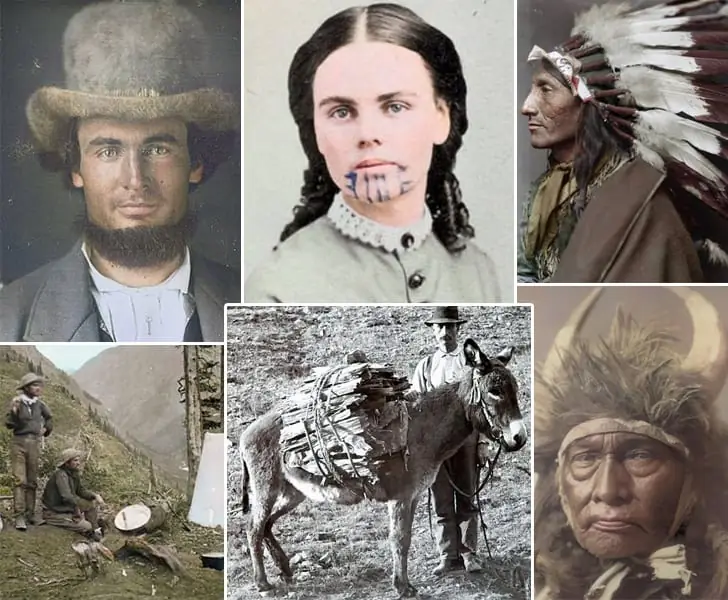
The Wild West is a fascinating period in the history of America. If you’re a fan of Western movies, you probably think you know all about it: the gunslinging law officer, the wretched outlaw, the mysterious Indian, the adventurous farmers, and the ambitious prospectors. But was the real Wild West anything like the movies?
In this list of rare Wild West photos, featuring remastered colored pictures, we hope to offer you a glimpse of what America was like back in the 1800s. And while there’s some truth to many of your favorite Old West myths, we believe you will find the real deal to be even more exciting.
African-American Sheriff – 1903
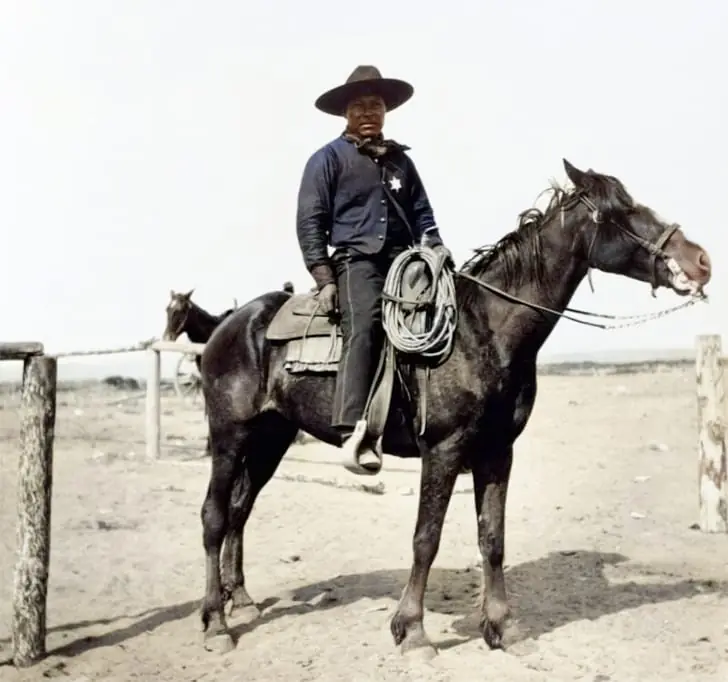
This picture was captured in Pocatello, Idaho, in 1903, and it shows a post-Civil War African-American sheriff. While the tales and myths of the Wild West tend to focus on white men, it is believed that one in every four cowboys was black at the time.
Even after the end of the Civil War, prejudice against African-Americans was still common in the United States. For that reason, being a cowboy was one of the few jobs available to men of color. African-American history is still grossly misrepresented, with a 2015 study finding that it takes only 9% of history class time in American schools.
African-American Cowboys – 1913
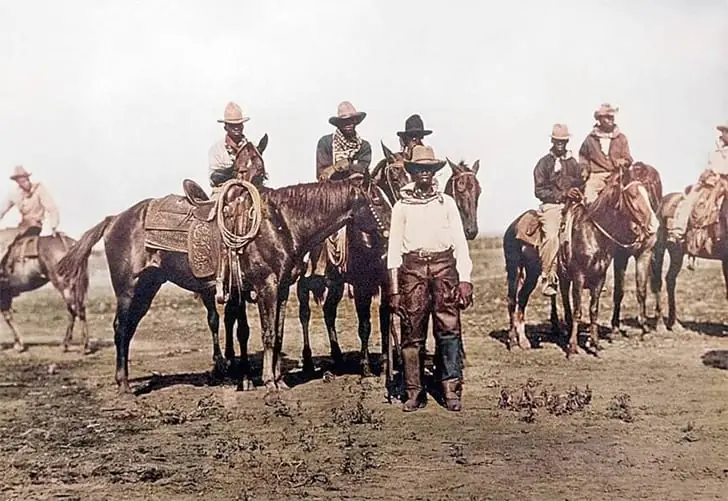
This picture was taken in Bonham, Texas, and shows a group of African-American cowboys. In the aftermath of the Civil War, former slaves made for roughly 25% of the workforce in the range-cattle industry. These men were literally “born” into the business and had great expertise in handling cattle.
After the war, African-American cowboys were given the same wages and responsibilities attributed to white men, but they were still subject to widespread discrimination. A 1994 anthology refers that, even though black and white cowboys shared sleeping quarters, racist roles were still a part of everyday life.
California Silver Prospector – 1881
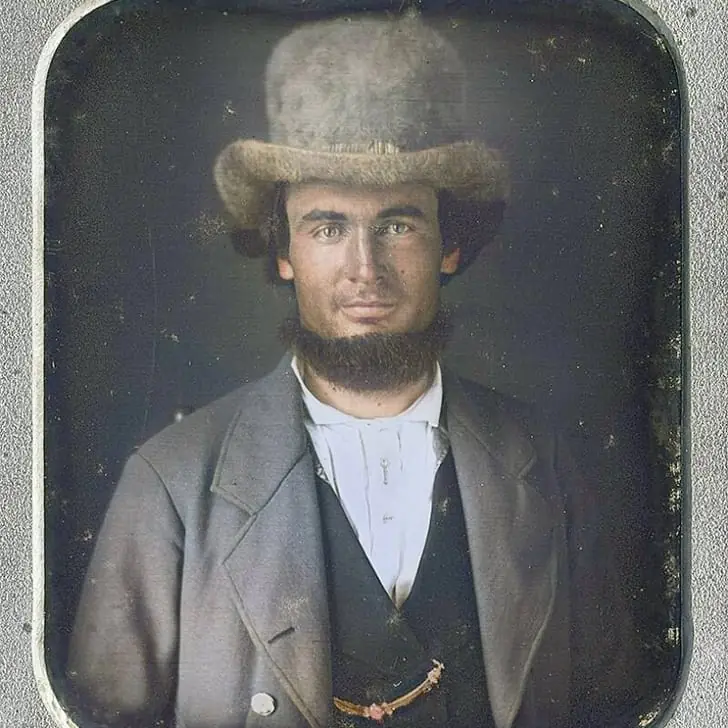
In 1881, ambitious prospectors like the unnamed man in the picture founded the silver mining town of Calico, California. They were inspired by the iconic 1849 California Gold Rush and worked on this particular silver mine until 1907.
Interestingly enough, you can still visit the site where these prospectors extracted much of the silver distributed in the golden state throughout the late 19th century. It’s an abandoned town in the Mojave Desert that makes for a unique tourist attraction. In 2005, former Governor Arnold Schwarzenegger proclaimed the old mining site to be officially called California’s Silver Rush Ghost Town.
Chippewa Indian John Smith – Circa 1915
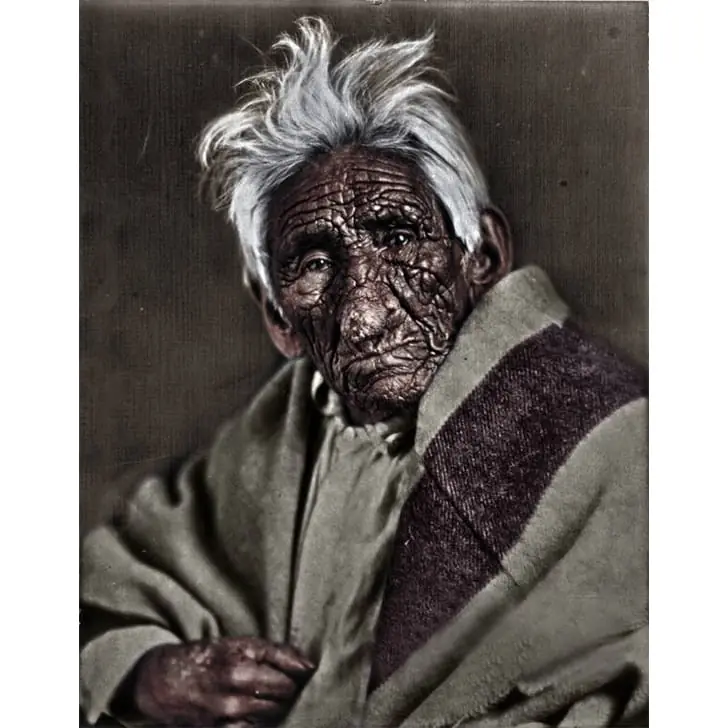
Legend says Chief John Smith died of pneumonia at the age of 137, but it’s now believed he was aged 96 to 100 by the time he passed away. Two years before his death, the iconic Chippewa Indian was featured on a U.S. motion picture featuring old Indians.
Smith’s fabled longevity and unique facial features turned him into a Wild West legend, and he was visited by many photographers, adventurers, and curious people before passing away in 1922. He joined in on the action, often selling photos of himself to passengers to pay for train tickets.
Cowboy With Lasso – 1902
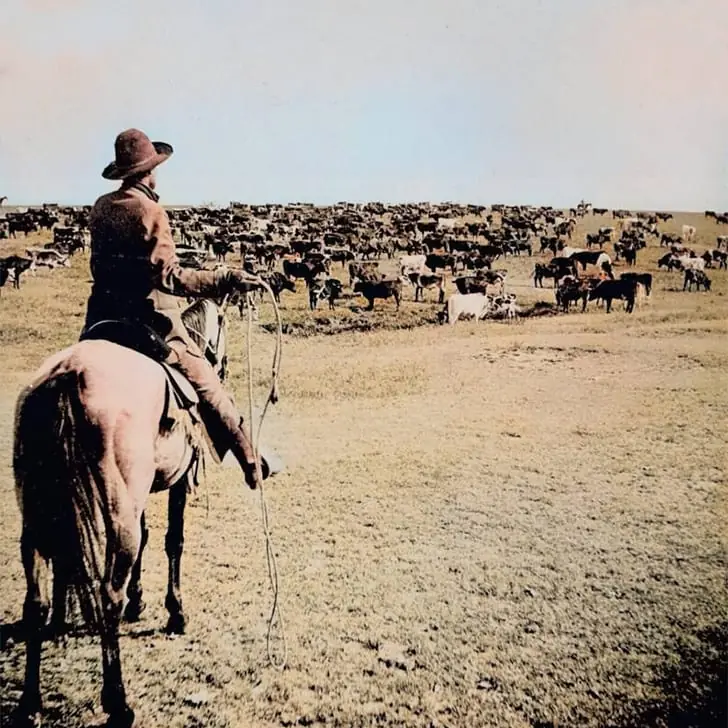
Reportedly captured in Kansas in 1902, this picture shows a Wild West cowboy with a lasso. In America, the lasso is normally referred to as a “rope,” and there are even modern-day “team roping” competitions in the rodeo industry.
Back then, though, lassoing was a fundamental skill for cowboys, as it allowed them to capture and take control over cattle quickly. The word comes from the Spanish and Mexican cowboys, who used the lasso technique long before the Americans adopted it. The history of the lasso goes even further back, though, all the way to Ancient Egypt.
California Gold Prospector – Circa 1851
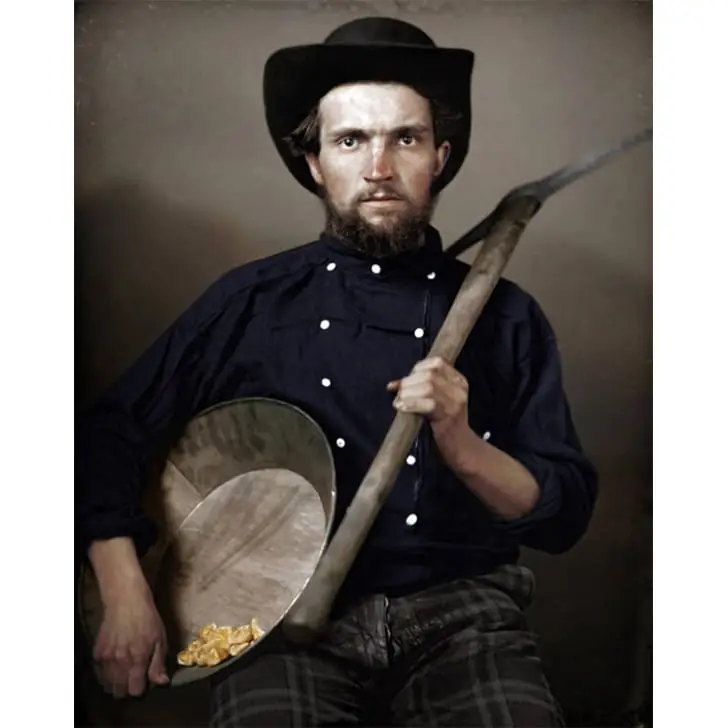
The California gold rush was at the center of a massive wave of migration that caused an estimated 300,000 men to leave for the golden state. Their goal? To obtain overnight fortune by mining the land, and the consequences were immense.
While the 1849 gold rush is an indispensable part of the history of California, it spawned a sudden gold influx in the money supply, leading to numerous atrocities against the native American population. Still, the idea that one man can pick up a fortune straight up from the rivers of California is inspiring and romantic. Nowadays, setting up a proper gold mine can cost several millions of dollars.
Chinese Workers – 1800s
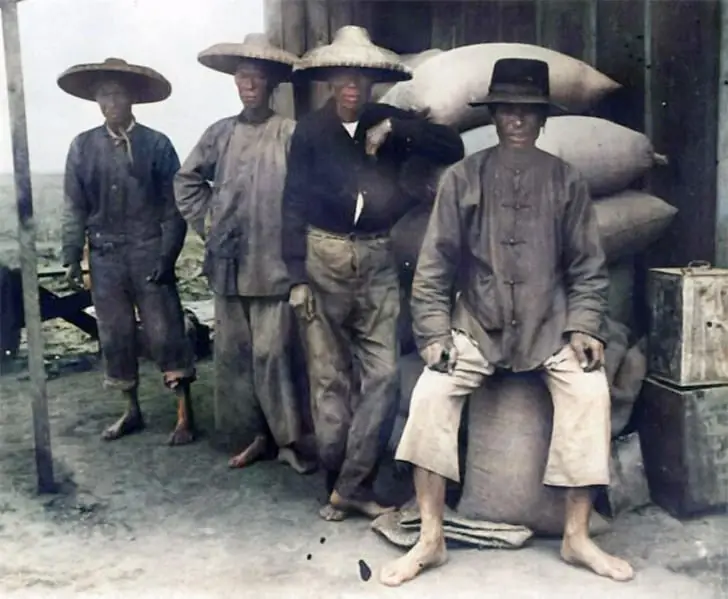
Famously diligent and hardworking people, the Chinese were vital in the economic development of the U.S. during the 1800s. They left their home searching for better living conditions and found jobs in the gold mines of California and the booming American railroad industry.
In the 1860s, the U.S. was trying to create the First Transcontinental Railroad, and it is said that the epic feat wouldn’t have been possible without Chinese labor. The railroads helped unite the country but didn’t prevent the Chinese from being discriminated against, and even the Immigration Act of 1882 (America’s first anti-immigration law) was mainly anti-Chinese.
Sioux Indian Iron White Man – 1898
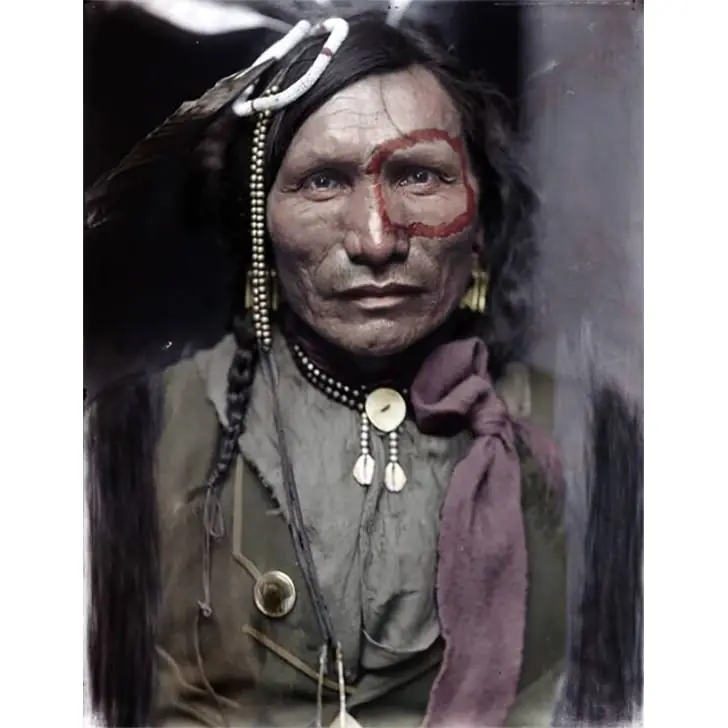
In 1898, photographer Gertrude Käsebier sent a letter to the legendary William “Buffalo Bill” Cody requesting permission to photograph the Native Americans in his crew. Bill ran one of the Wild West’s most popular traveling shows, and Sioux Indians like Iron White Man (in the picture) played a huge role in its success.
Käsebier kept busy documenting the lives of Native Americans for decades, and her photographs are often the only evidence that men like Iron White Man have ever existed. She was inspired by her childhood on the Great Plains, where she often played with Native American children.
Joe Black Fox, Another Sioux Indian – 1900
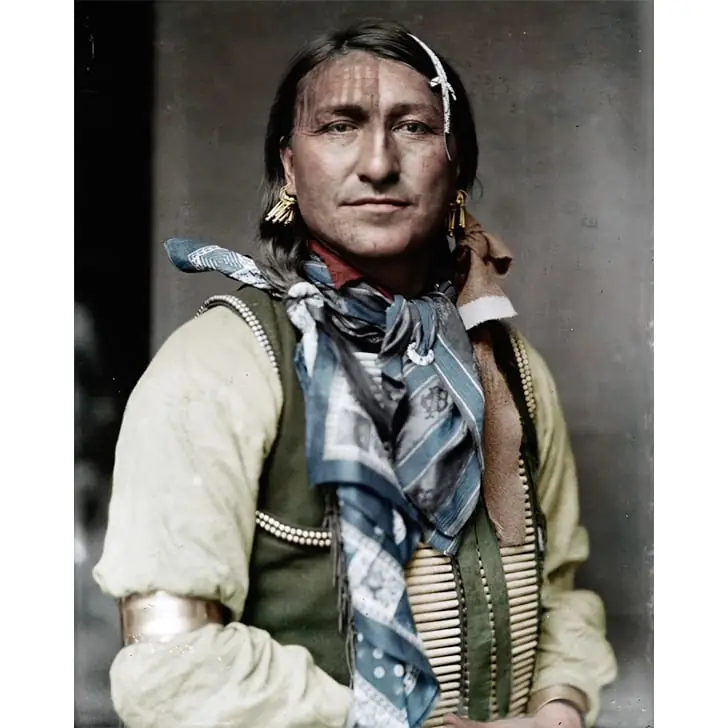
While we know the man in the picture was a former Sioux Indian chief by the name of Joe Black Fox, not much is known about his life. He worked for possibly three decades on Buffalo Bill’s Wild West Show after being recruited by the man himself to join the traveling caravan. Bill’s widely successful tour started in 1883.
Luckily, Joe Black Fox was photographed by Gertrude Käsebier around 1900. This beautiful portrait of the Sioux Indian was later colored and featured in a 2007 Smithsonian Institute exhibition, promoted by PBS.
“Hanging Judge” Roy Bean – Late 1800s
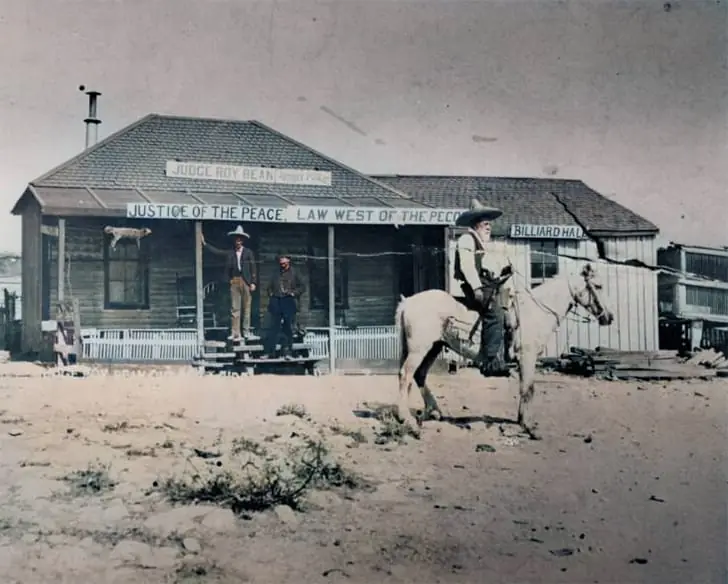
The Wild West was a time during which the law was applied locally and with a firm hand. Still, the legendary Judge Roy Bean doesn’t deserve to be known as the “hanging judge.” Despite his infamous reputation, he only ever sentenced two men to hang, and one of them even escaped.
Either way, Roy Bean’s popularity has lasted for over a century, mostly because he was one of the few honorable lawmen in the Val Verde county of Texas. Interestingly enough, his saloon (in the picture) was also used as his courtroom.
The Klondyke Dance Hall & Saloon – 1909
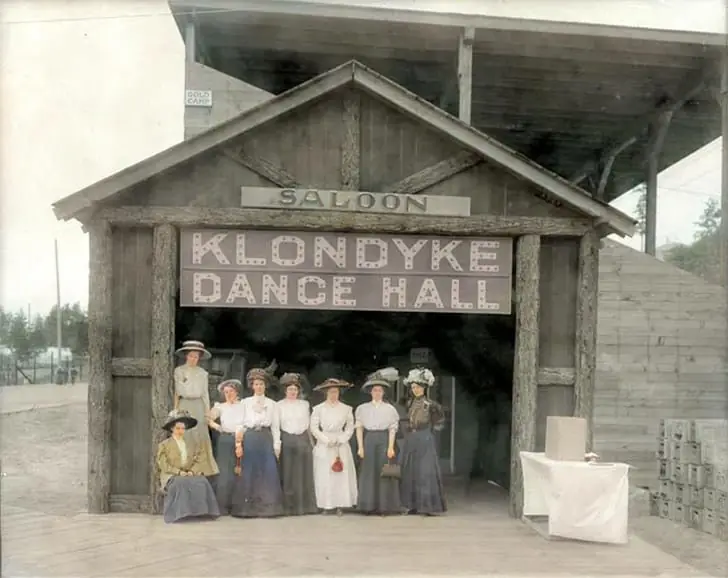
Contrary to popular belief, the dance hall girls of the Old West were not “ladies of the night” but rather skilled and well-respected entertainers. According to Curious Historian, these women were paid good money to attract men to local saloons without having to resort to physical exploitation. Still, they were sometimes forced out of marriage by their male saloon bosses.
In the picture, you can see the ladies of the Klondyke Dance Hall & Saloon, which was temporarily closed for being “too realistic.” This historical snap was captured in 1909 in the city of Seattle, Washington.
Wyatt Earp At 21 – Circa 1870
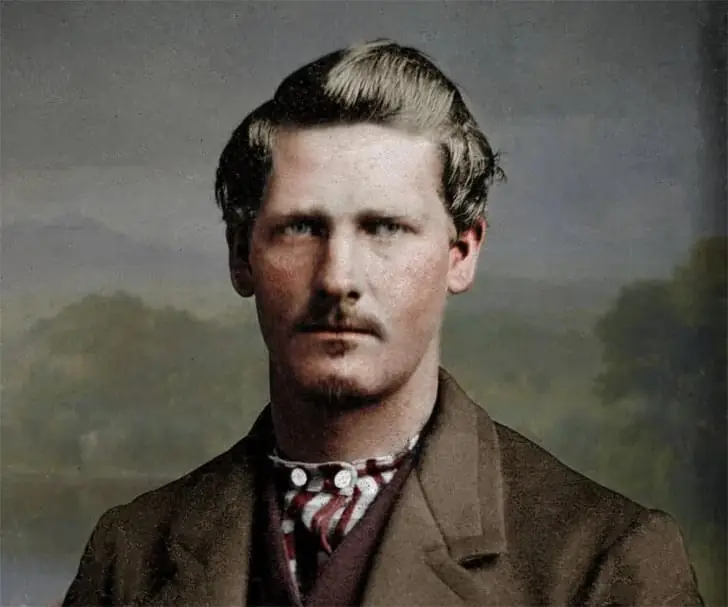
Arguably one of the most iconic figures of the Wild West, the American law enforcement agent Wyatt Earp is celebrated for his gunfighting abilities and rebellious attitude. In a way, he’s the prototype of the honorable antihero figure that still dominates America’s imaginings today.
In this picture, taken either in 1870 or a year before, a 21-year-old Earp was snapped in Lamar, Missouri. At the time, he was a married man who had just become anointed Justice of the Peace. The young Earp was severely affected by the sudden death of his wife Urilla, who succumbed to typhoid fever when she was about to deliver their first child.
Wyatt Earp At 75 – 1923
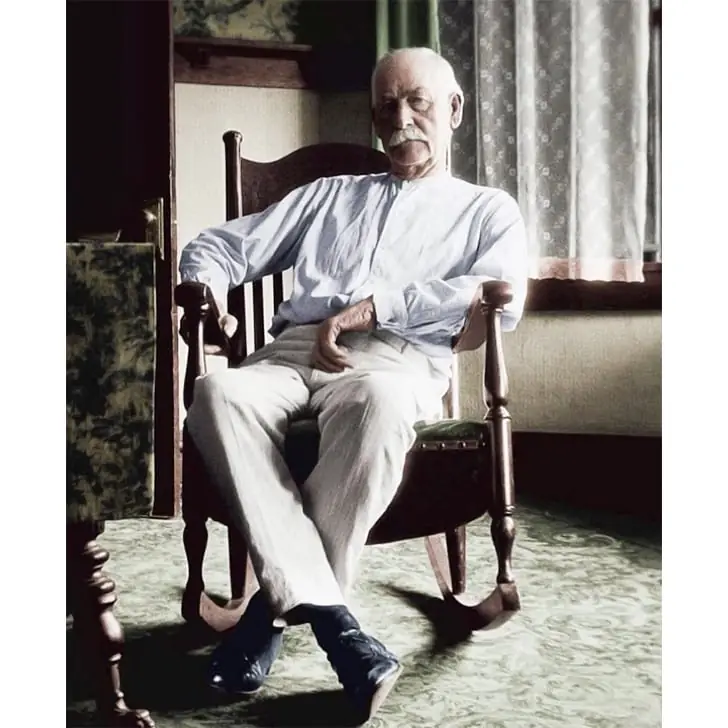
By 1923, Wyatt Earp was a 75-year-old American legend. He was photographed in Los Angeles, California, a few years before his death in 1929. The survivor of numerous gunfights who outgunned dozens of outlaws in his life, the mighty Earp would end up dying from chronic cystitis.
The same year this iconic picture was taken, Earp appeared as a character in the silent Western movie Wild Bill Hickok. But his reputation as a fearless gunman is primarily due to Wyatt Earp: Frontier Marshal, a biography published in 1931 that became a bestseller. Written by Stuart N. Lake, the book is said to be “extremely flattering.”
Colorado Miner’s Camp – 1875
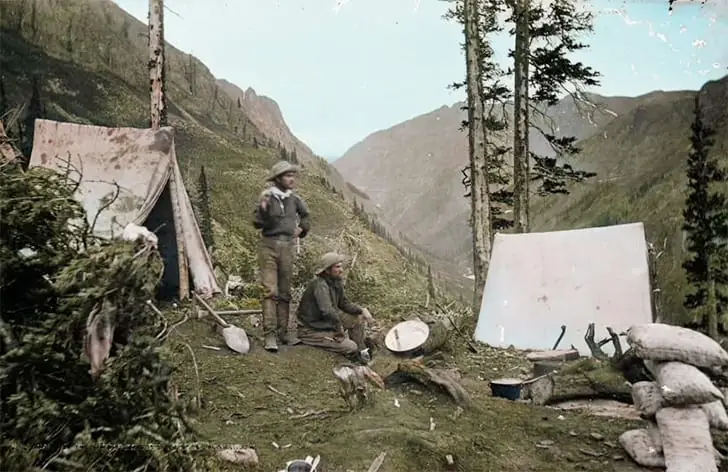
The North Star and Mountaineer Lodes in the San Juan County of Colorado have been the site of numerous mining explorations since 1860. In this picture from 1875, two miners take a break from gold prospecting to strike a pose. They’re standing in one of the hills of the beautiful King Solomon Mountain.
Colorado mines were incredibly fertile and functioned for nearly a century. While the site is mainly known for its gold explorations, it was also a perfect spot for the extraction of silver, lead, and other hard metals.
Santiago McKinn – Circa 1886
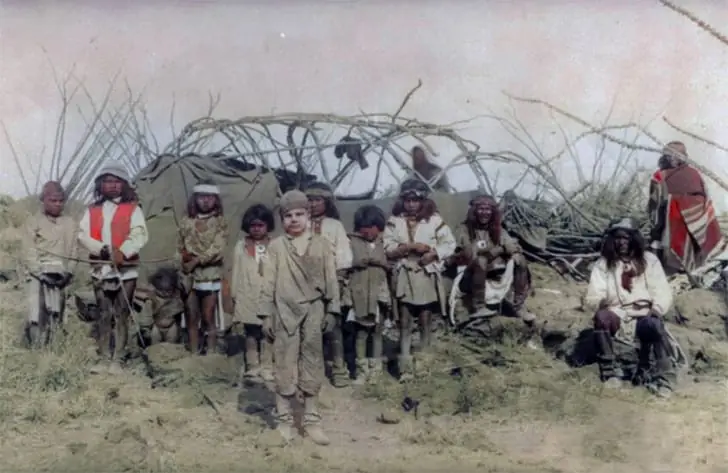
The Wild West has produced some of the best tales in American history, but it’s a wonder the story of the little Santiago McKinn (also known as Jimmy McKinn) is still relatively unknown. Captured by the Apaches as an 11-year-old child, McKinn experienced living among a Native American tribe.
After being kept at the Chiricahua Apache Camp headed by Apache Chief Geronimo, McKinn became deeply connected to the tribe that he initially refused to go back to his family after being rescued. In total, he lived for about five months alongside Geronimo’s men.
Apsaroke Chief – 1908
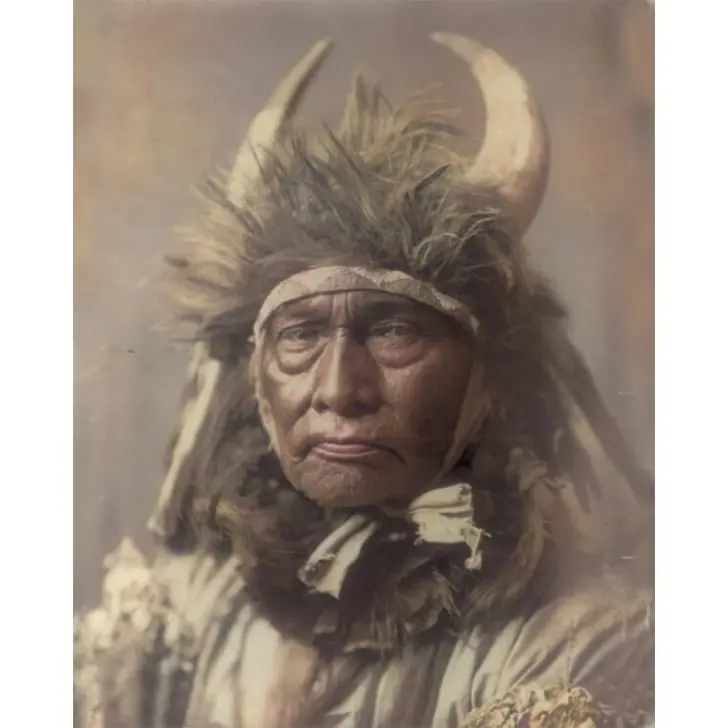
The Apsaroke, also known as the Crow, is a federally recognized Native American tribe from southern Montana. The man in the picture is the legendary Bull Chief, who led many Apsaroke expeditions (most of them violent) during the late 1800s.
After being repeatedly defeated as a young man, Bull Chief eventually became a notorious Native American warrior in his later years. He attributed his successes to his mystical visions, often caused by long periods of fasting that could last as long as four consecutive days. He was interviewed by the American ethnologist Edward S. Curtis at the beginning of the 20th century.
Navajo Man in Ceremonial Dress – 1904
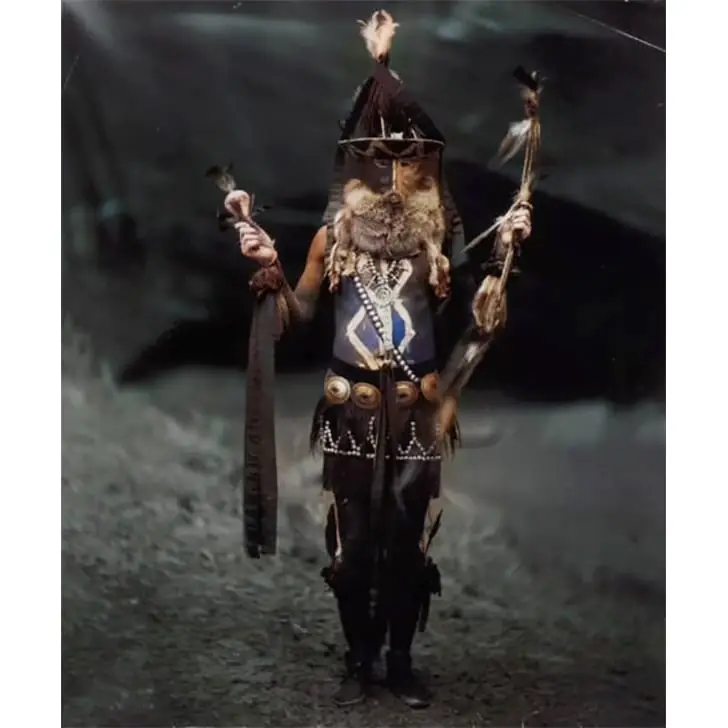
The Navajo are known for their artistic skills and their complex idiomatic expressions, once used in U.S. Army communication lines during World War II. The language of the Navajo was so elaborate it was virtually indecipherable for the Japanese forces.
In the 17th century, the Navajo were influenced by the Spanish conquistadores and became excellent horse riders. In the picture, reportedly taken in 1904, you can see a Navajo man in full ceremonial dress. The Navajo, one of the largest American Indian tribes, are known for being great at making wool clothes, jewelry, and pottery.
Bison Skulls – Circa 1870
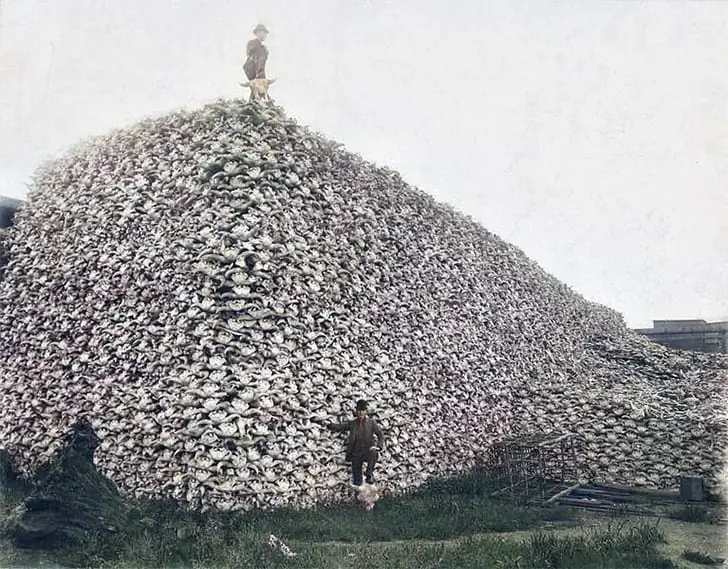
This tragic and dismal sight is the result of the widespread killing of bison during the 1870s. This pile of bison skulls wasn’t the outcome of hunting per se, but rather the effect of a U.S. Army campaign against the enemy Native tribes.
Believing that the killing of bison would lead to the starvation of the neighboring Native people, the army started a widespread campaign in the Great Plains, encouraging every white man to kill as many bison as possible. If it wasn’t for the intervention of Congress at the end of the century, bison extinction was a looming possibility.
Olive Oatman – Circa 1863
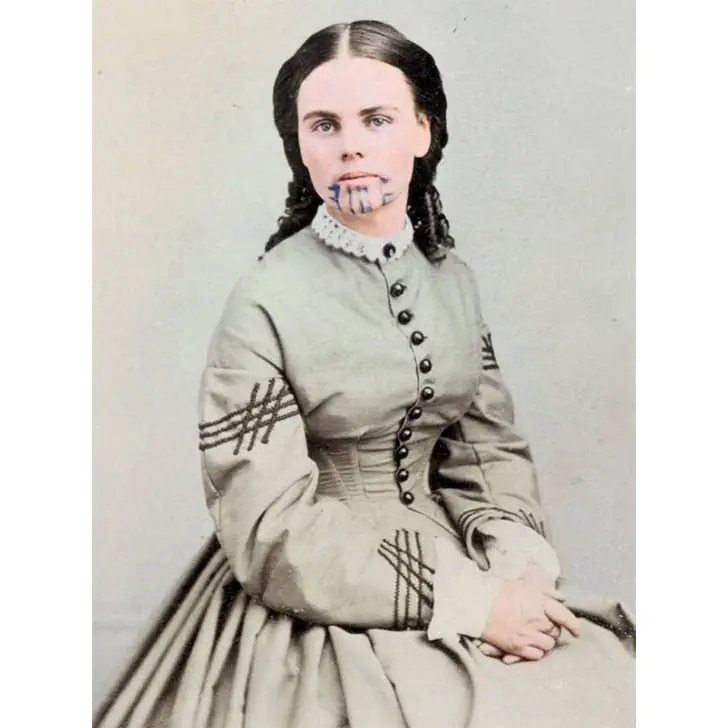
Olive Oatman and her sister Mary Ann were captured by a Native American tribe while traveling from Illinois to California. After being enslaved, Oatman saw her sister die from starvation before getting traded to the Mohave people. She stayed with the Mohave for years before being released.
After coming back to American society, Oatman published a memoir reporting her dramatic experiences. While imprisoned by the Mohave, she had her face painted blue, reportedly becoming the first-ever white woman with a Native tattoo. The site in Arizona where Olive and her family got attacked is now a town named Oatman.
Wild West Trappers – Late 1800s
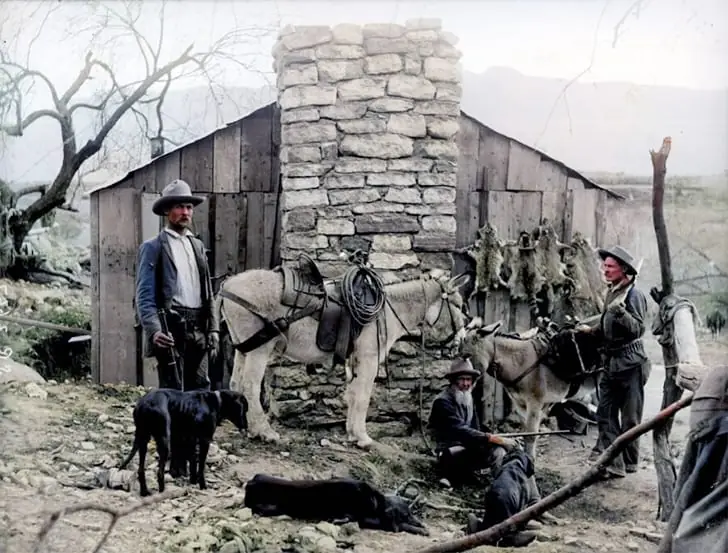
In the late 1800s, the Arizona territory was, for the most part, a wild and untamed land. Trappers and hunters of the Wild West had to find their way into the wilderness to make a living for themselves. As you can tell, conditions were extremely harsh: poverty, wild animals, criminals, and hostile Indians roamed the land.
These brave men were mainly poor and illiterate, and many of them survived by trading fur. From the perspective of history, they were responsible for “colonizing” the great remote plains of America, founding new small towns and camps.
Whirling Horse, Sioux Indian – 1898/1900
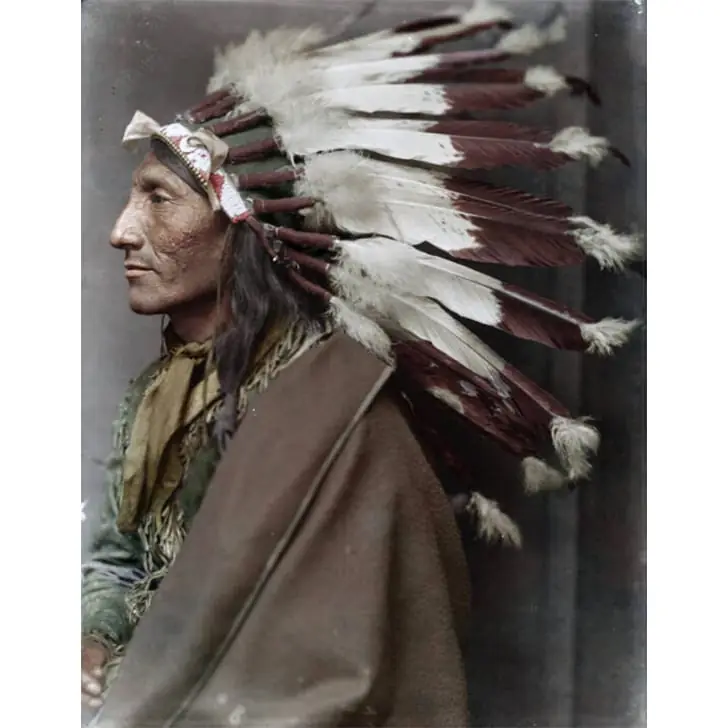
Whirling Horse was one more Sioux Indian who performed with Buffalo Bill’s Wild West Show. In this picture, taken either in 1898 or 1900, Whirling Horse was captured by the lenses of the aforementioned photographer Gertrude Käsebier.
Buffalo Bill’s Wild West Show is arguably the most iconic and recognizable of all the open-air theatrical productions of the Wild West. Usually, these shows explored contemporary themes and stereotypical characters, such as the cowboy, the Indian, and the outlaw. Most Wild West shows were inspired by the Vaudeville genre and based on actual (albeit extremely exaggerated) stories.
Wild Bill Hickok – 1800s
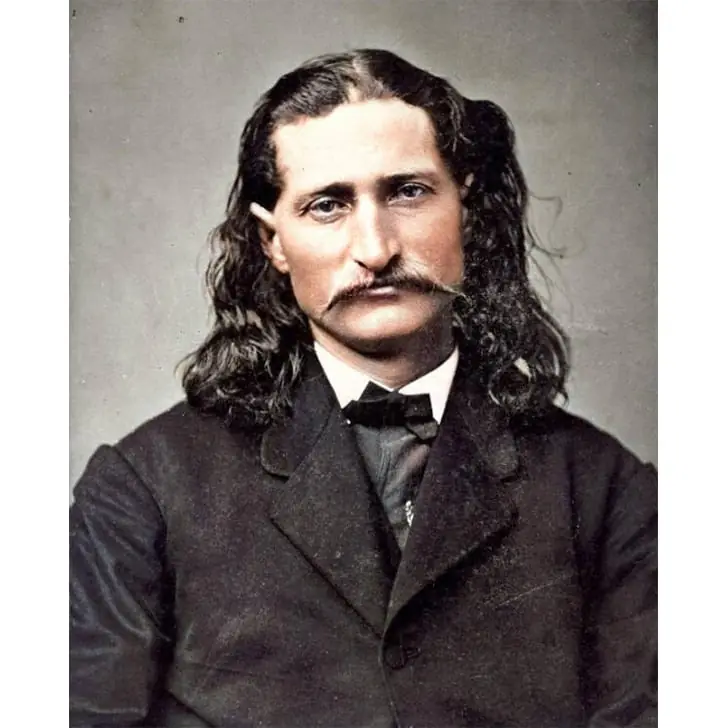
Like most successful gunfighters of the Old West, Wild Bill Hickok was a legendary folk hero. While said to have fabricated or exaggerated some of his adventures, Hickok was a well-respected soldier, gambler, and even actor! He was seen as a great friend of the people and as a lone vigilante.
Hickok, born in 1837, played his last round of poker in 1876 after getting shot in the head from behind. The culprit was an “unsuccessful gambler” by the name of Jack McCall. The tragic event was recreated in the 2004 TV series Deadwood.
Gathering Wood – Late 1800s
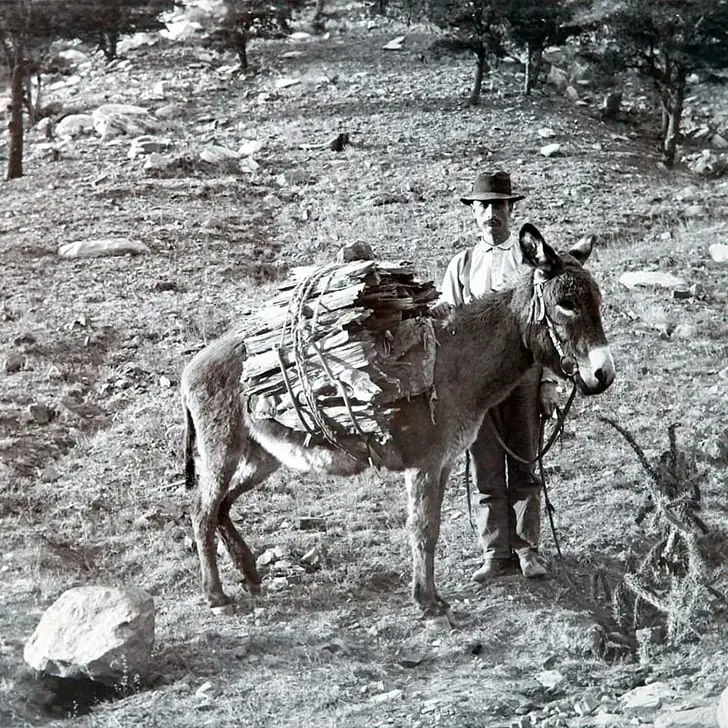
This picture of an unnamed man gathering wood with his donkey is believed to be taken by a British farmhand in the late 1800s. The period marked the rise of big business in America. Fueled by the need to build a complex nationwide railroad system, certain woods (such as timber) were extracted on a massive scale.
This hapless, lone wood gatherer was no match to the big timber productions that started appearing all across the U.S. during the railroad days. The railroad industry also gave rise to numerous mining productions and massive migration of Chinese workers.
Livestock Branding – 1880s
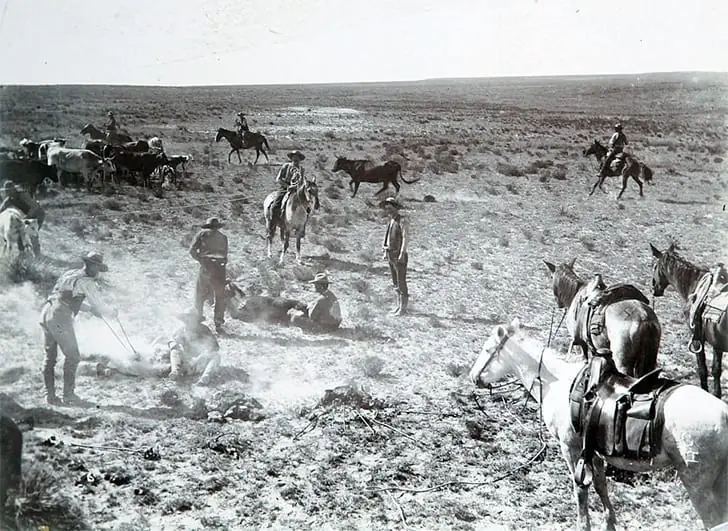
The open plains of Old West America are often romanticized in novels and cowboy movies. But this typically American landscape was actually beneficial for cattle workers. In this rare photo, a group of cowboys makes the most of the plains to brand their cattle.
Livestock branding was essential back in the day because multiple ranches roamed together in the open plains of the 1880s. To brand their animals, Old West cowboys used an iron rod with a symbol or mark on the end that was heated in fire and then pressed against the body of the animals.
Dinner Time – 1880s
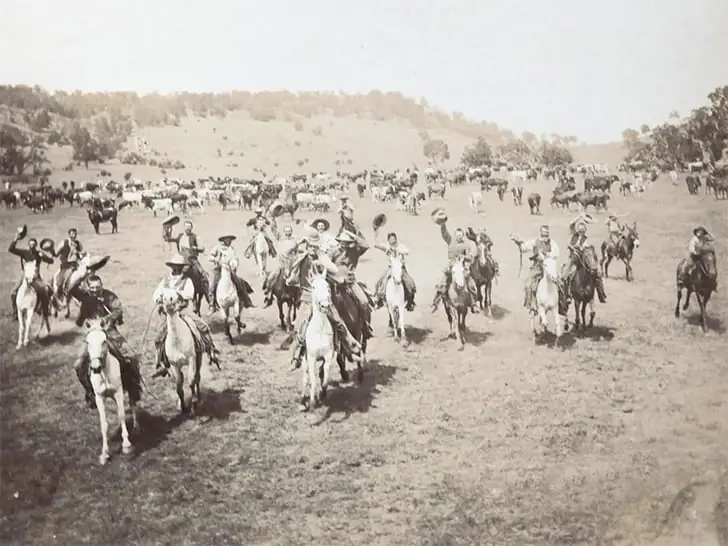
In this perfectly timed photo, a group of cowboys sensationally rides towards the camera. This picture marks the moment the cowboys started riding back home to have some well-deserved rest after a hard day’s work. They look like they’re very excited about dinner!
Sadly, the late 1800s would mark the beginning of the end of the open range style of cattle farming. The railroads eliminated the need for long, risky on-foot drives, and most of the open plains of the U.S. got fenced entirely at the start of the 20th century.
Rodeo Fan – 1880s
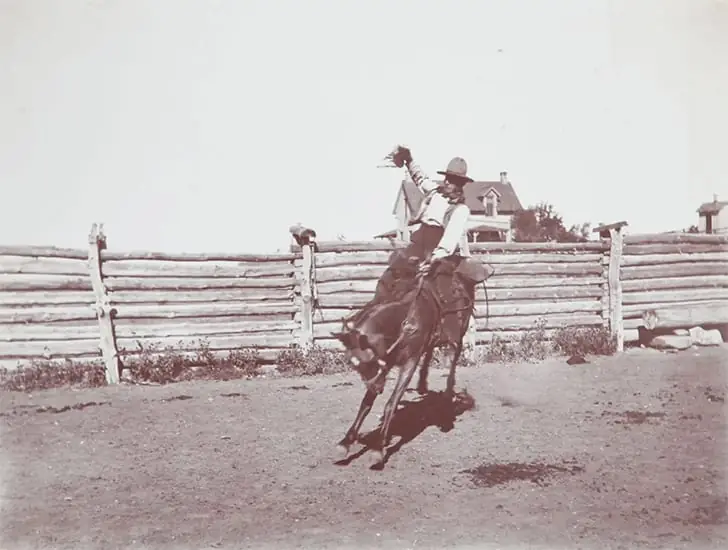
In America, the art of the rodeo started in the early 1800s. At the time, it was mostly a game played between American cowboys and northern Mexican vaqueros who wanted to prove they were more skilled than one another. But after the Civil War, the rodeo became a way of life for many talented American cowboys.
The first professional rodeo competition was reportedly held in Prescott, Arizona, in 1888. Wild West shows, such as Buffalo Bill’s, employed skilled rodeo cowboys in their performances, which often featured live animals. By the 1920s, rodeo competitions made it all the way to Madison Square Garden.
Cowboys & Horses – 1880s
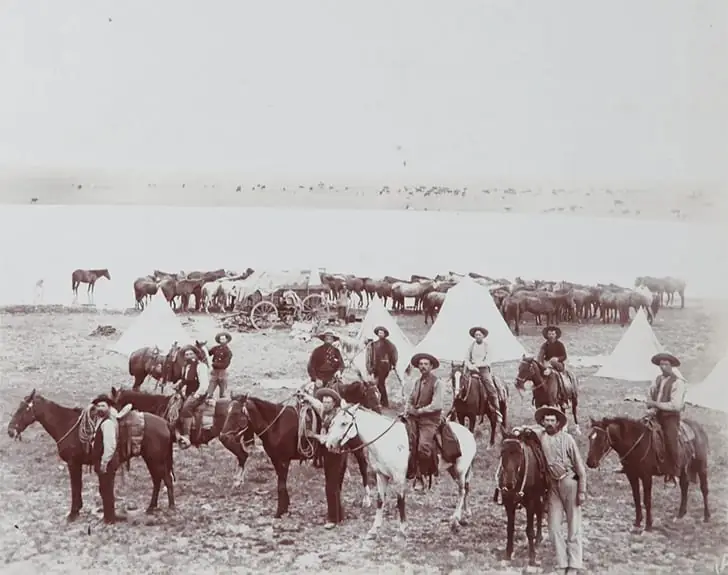
Before the automobile launched a major industrial revolution in the U.S., horses were a fundamental part of the American way of living. Cowboys, in particular, had a powerful bond with these beautiful animals, which were an utterly essential companion for every cattle worker in the country.
While all sorts of horse breeds roamed the U.S., the American quarter horses were the favorite in the frontier days. Known for their calm nature, they were perfect for ranch work. These horses were also versatile and powerful enough to race, work cattle, and pull wagons.
Two Tired Cowboys Take a Break – 1880s
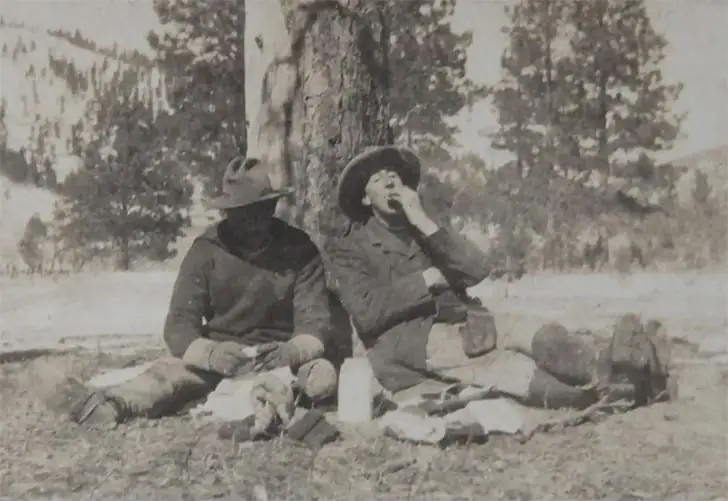
This 1880s picture shows two tired cowboys taking a well-deserved break in New Mexico’s Urraca Canyon. Long before the standard 8-hour per day work week was invented, these restless men watched over the cattle non-stop, with the average cowboy working up to 20 hours a day!
A good ten cowboys and roughly 30 horses were needed to manage a herd, and the job was extremely demanding. Cowboys had to watch over the animals at all times and deal with external threats such as outlaws and hostile Indians. To put it simply, they were tough as nails.
Raton Pass, New Mexico Steam Locomotive – Late 1800s
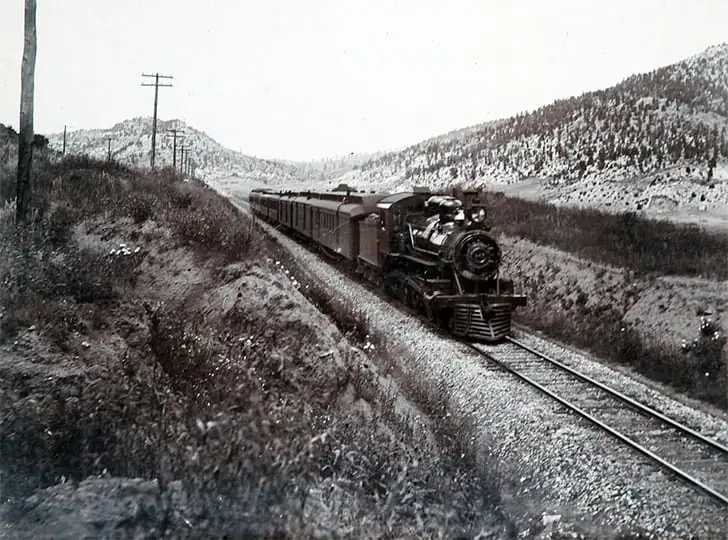
In a way, the Transcontinental Railroad was responsible for transforming the U.S. into the country that it is today. Building this massive nationwide communication line was not an easy job, as it required an unprecedented amount of labor and material resources. The railroads were often attacked by outlaw gangsters who rejected the ideas of progress and civilization too. But in the end, it was worth it!
In this late 1800s picture, included in the collection of photos captured by an anonymous British farmhand, the Raton Pass, New Mexico steam locomotive was snapped in all of its splendor. The railroad was the ultimate omen of 20th century America.
The “Final Station” of the Wild West – Late 1800s
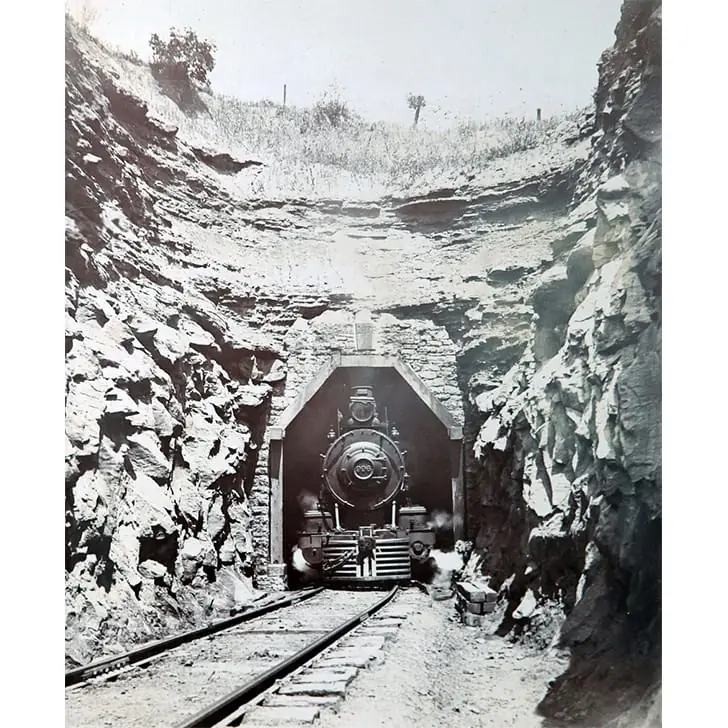
Naturally, most outlaws hated the idea of a railroad-covered country. The rise of the locomotive gave way to the end of an era, propelling the U.S. into a new, more prosperous, and safer industrial age. Suddenly, the American landscape was no longer a wild and untamed nation. Instead, it was united, linked by the Transcontinental Railroad.
In a way, the U.S. as we know it today was “made” by the railroad. These society-changing communication lines were an incentive to all forms of civilization. It even gave rise to the accurate measurement of time that we still use today, far from the reckless ways of the Wild West.