The Midnight Sprint Nobody Signed Up For
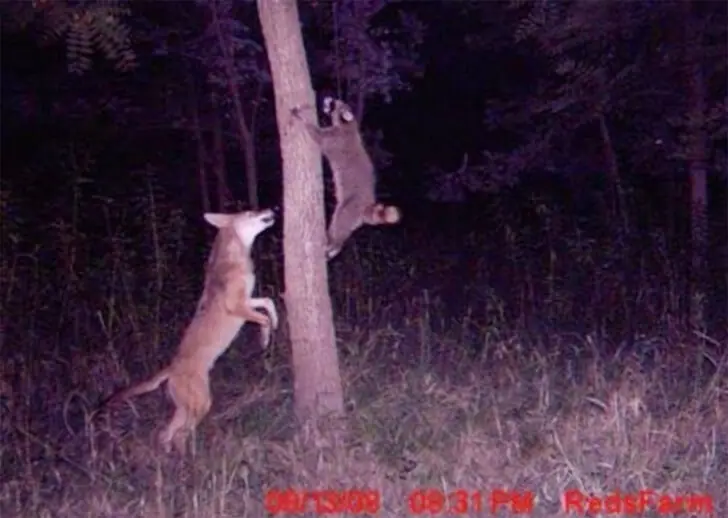
A lot is happening in this snapshot, but the raccoon seems to have it figured out. With a coyote closing the distance, the little bandit has gone for the oldest survival strategy in its playbook: sprint, scramble, and climb. It looks like the beginning of a cartoon chase scene where the odds feel stacked, but you know the scrappy underdog has a trick up its sleeve.
When Whitetails Whisper
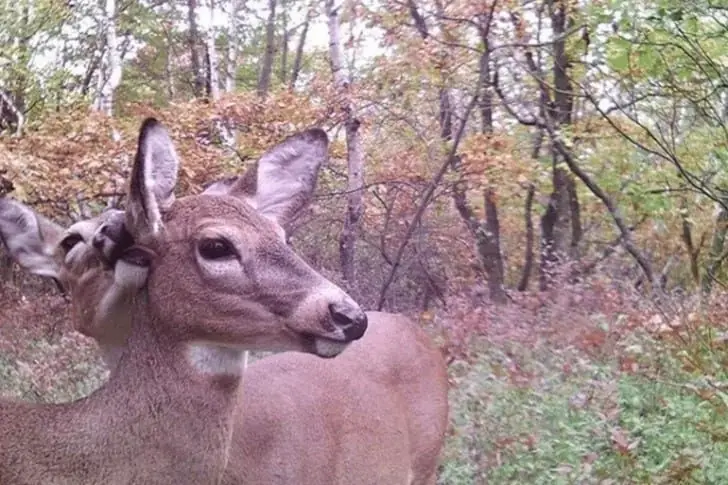
If deer had a way of sharing the latest woodland drama, this would be it. They rely on scent glands near their heads to swap information, so a little ear nuzzle could be more like passing along a forest bulletin than showing affection. Considering their sense of smell is hundreds of times sharper than ours, that “whisper” probably carries more detail than a week’s worth of neighborhood gossip.
Social life for white-tailed deer is full of these subtle cues, especially among does that stick together in family groups. As such, this scene feels less like a tender moment and more like the deer equivalent of leaning over to spill secrets during class.
Motherhood 101: Bear Edition
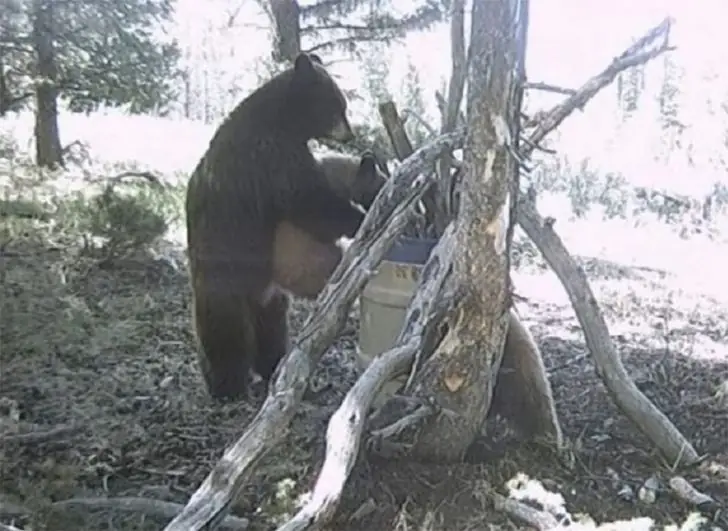
This moment looks less like wilderness survival and more like parenting 101. Mom’s got the cub propped up like a kid getting a boost to peek over the counter, except the “counter” here is a container that probably smells like snacks.
Bears have one of the strongest senses of smell in the animal kingdom; scientists say it can be up to seven times stronger than that of a bloodhound, so whatever was inside must be broadcasting like a billboard. Now, the whole lesson looks like a family field trip: the parent providing the lift and the kid getting the front-row seat.
The Unsuspecting Glamorous Hare vs. the Mountain Lion
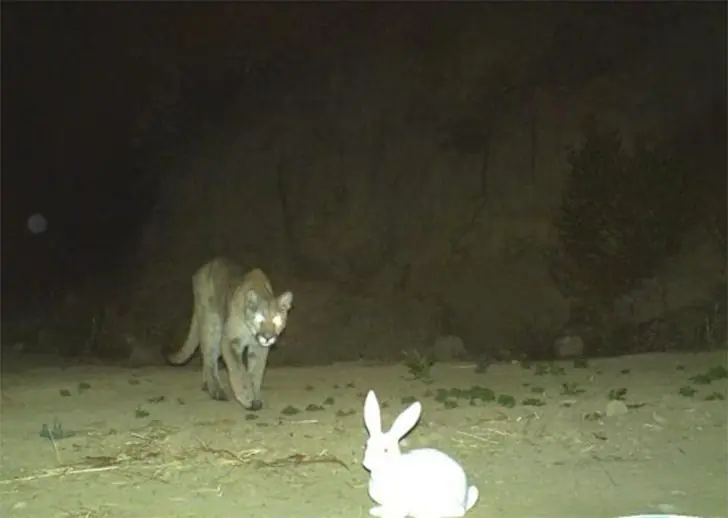
The hare might think this is just another peaceful night under the stars, but science says the quiet stalk happening behind it could turn that spotlight moment into a sprint at any second. While the tiny creature bathed in the spotlight like it’s auditioning for a calendar cover, in the shadows is a mountain lion already plotting dinner.
Rabbits can actually sprint up to 45 miles per hour, which means this fluffy show-off isn’t completely defenseless, but pausing for glamour shots doesn’t exactly help the odds. After all, mountain lions, also called cougars or pumas, rely heavily on stealth and can leap as far as 40 feet in a single bound.
The Midnight Boxer of the Forest
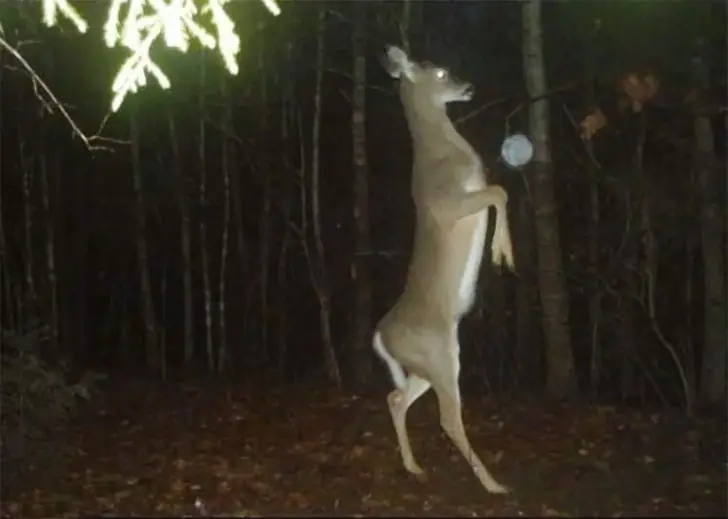
Catching a deer upright on its hind legs feels less like a wildlife snapshot and more like something out of an old campfire tale. Deer are actually known to rear up and spar by striking each other with their front hooves, a behavior widespread among bucks during mating season.
Under moonlight, though, the sight takes on an almost mythical quality, like the woods briefly gave rise to some strange half-human figure. What makes it even wilder is that deer are built with powerful back legs that let them leap as high as 10 feet, so balancing upright isn’t as unnatural as it looks.
The Salmon Heist in the Woods
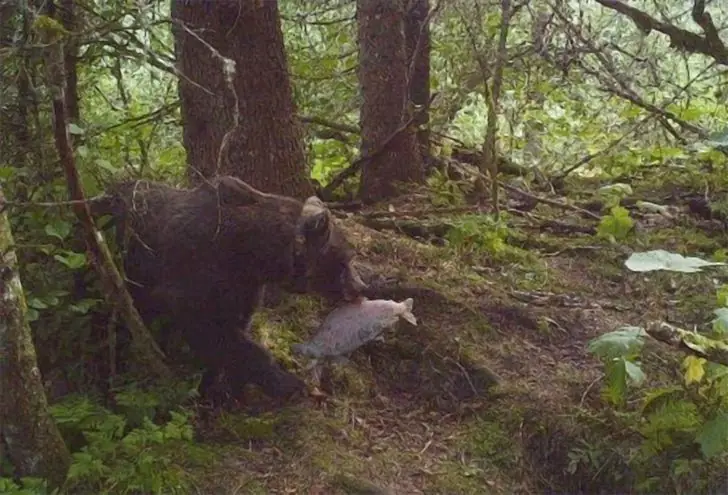
There’s a certain swagger in the way this bear carries its catch, like it just won the jackpot and isn’t about to split the prize. Grizzlies can snag up to 30 salmon in a single day during peak runs, but competition is fierce when everyone’s hungry.
Stashing a wriggling fish deep in the brush is a clever move; less risk of another bear muscling in on dinner and more time to enjoy the spoils in peace. What’s impressive is the precision behind the hunt. Despite weighing upward of 600 pounds, grizzlies are lightning-fast in water, often using a quick pounce to pin fish before clamping down with powerful jaws.
The Mystery Guest in the Woods
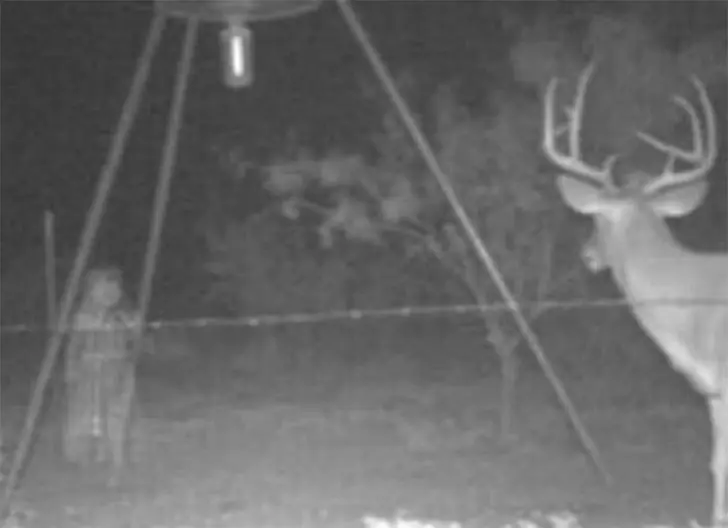
This shot feels less like a wildlife snap and more like a page torn from a creepy storybook. A buck stands alert at the feeder, but off to the side lurks a tiny figure in what looks like a dress, caught perfectly in the glow of the night camera. The whole scene feels like an accidental mash-up of hunting footage and a campfire tale nobody wanted to hear before bed.
Deer are famously cautious, with eyes adapted to pick up the faintest movement in low light. That means this buck likely noticed the figure first, sizing up the situation before deciding whether to bolt. Whether it’s a wandering kid, a doll-like prank, or just a distortion in the shadows, the mix of wildlife and human presence creates a freeze-frame that’s as unsettling as it is fascinating.
Desert Duel Under the Stars
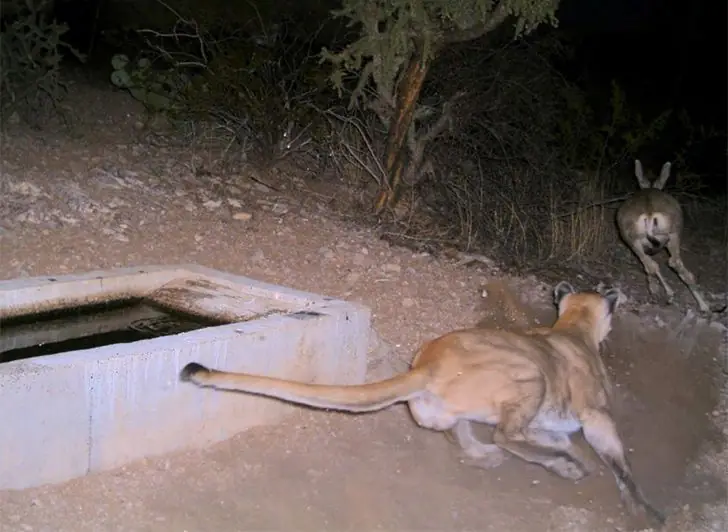
This looks like a split-second frame from a desert thriller: a deer blasting off with every ounce of speed, while a mountain lion coils low, ready to spring. Arizona’s White Tank Mountains are prime hunting grounds for these cats, who can leap 40 feet in a single bound and hit speeds near 50 miles per hour.
Deer, though, aren’t helpless extras in this drama because those zigzagging sprints often save them from becoming dinner. As intense as this scene feels, deer populations aren’t in immediate danger. Arizona Game and Fish reports healthy mule deer numbers across much of the state, even in lion-heavy regions.
The Jungle’s DIY Fashion Statement in The Flesh
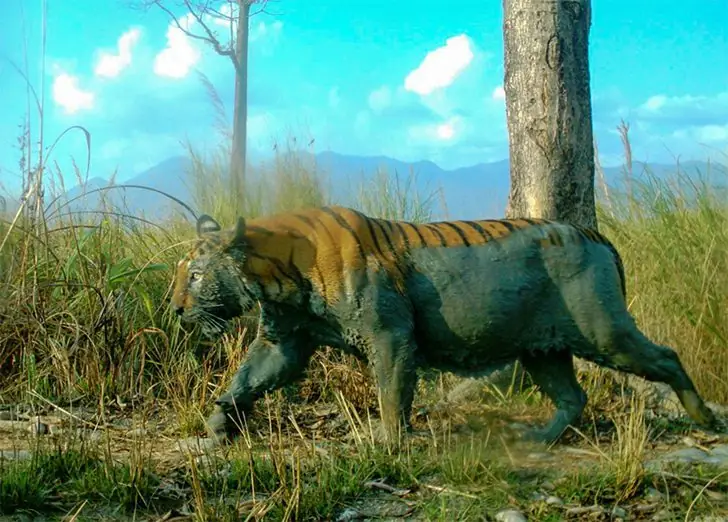
No, your eyes aren’t broken. This isn’t a half-loaded video game tiger, but rather a striped cat that decided mud was the accessory of the season. Tigers love a good roll in the muck, partly to cool off under the blazing sun and partly to shake off unwanted freeloaders like ticks.
However, the result is a fierce predator that looks like it spent the afternoon experimenting with a dip-dye look straight out of a style magazine. But this makeover isn’t just for show. The mud doubles as scent-masking camouflage, which makes it more challenging for deer or wild boar to catch a whiff of danger.
The Forest’s Intimidating Gentle Giant Is Not Looking for a Fight
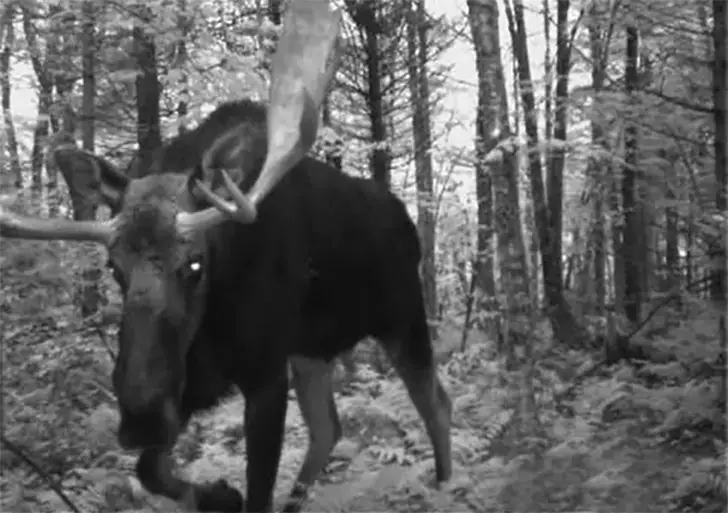
This moose looks like it’s glaring straight through the lens, ready to chase down anyone snooping on its evening stroll. With its towering frame and massive antlers, it could easily be mistaken for the villain of the woods.
But behind that shadowy stare is an animal that spends most of its time quietly grazing on shrubs, twigs, and aquatic plants, not plotting a midnight ambush. Moose may look menacing, but they’re generally solitary and uninterested in humans unless provoked. They can, however, become aggressive during mating season or if they feel cornered: an adult bull can weigh over 1,400 pounds and run 35 miles per hour.
When the Woods Play Tricks on You
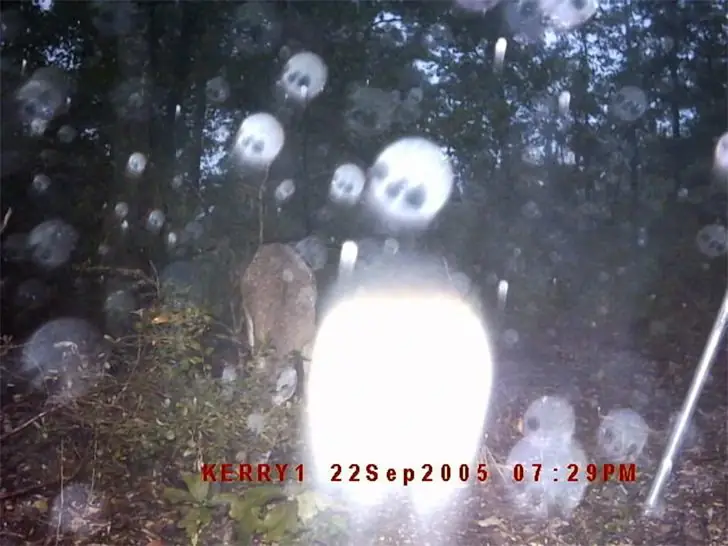
Look closely, and it feels like the forest has filled with glowing skulls drifting in midair, the kind of scene that would make anyone sprint back to the car. The flash from the trail cam gives the illusion of a crowd of ghostly watchers scattered through the trees. With the timestamp glowing red at the bottom, it looks more like a still pulled from a found-footage horror film than a wildlife study.
Of course, the truth may be a lot less sinister. Tiny water droplets, specks of dust, or even insects close to the lens can reflect the light in strange ways. This camera quirk is nicknamed “orbs.”
Ready to Join The Others?
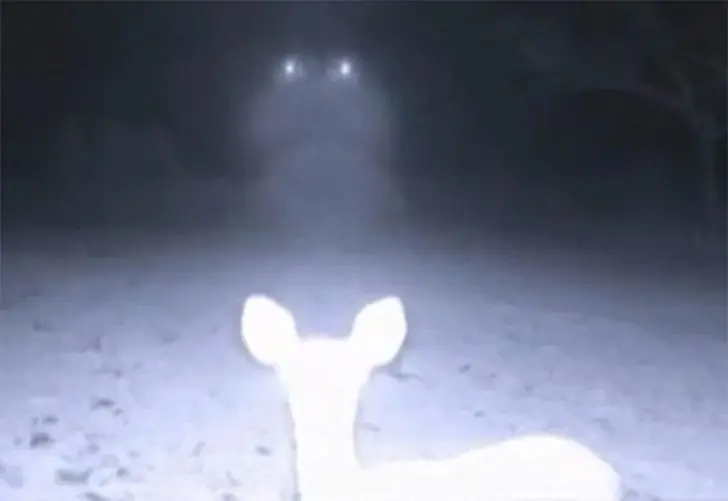
This has the mood of a low-budget sci-fi film, the kind where the quiet opening scene hints that something not-so-friendly is about to land. The deer’s frozen posture makes the moment even sharper, like it’s caught between curiosity and the instinct to bolt.
What’s really happening is less of an “alien invasion” and more of a trick of the lens. Trail cameras often use infrared or flash at night, and particles in the air can throw the light back as eerie orbs. Combine that with a wide, empty backdrop, and suddenly, the woods feel less like a forest and more like a set built for close encounters.
When Size Doesn’t Win the Night
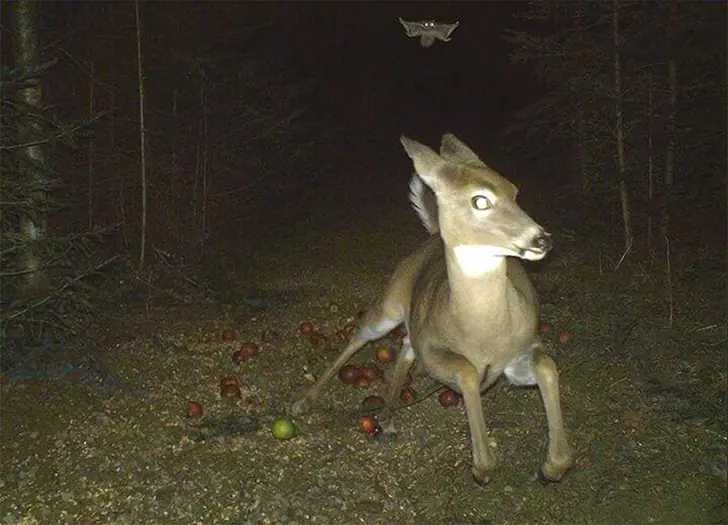
Here’s a perfect reminder that being the biggest in the forest doesn’t always mean being the bravest. The deer is caught mid-scramble, apples flying everywhere, while a tiny flying squirrel glides overhead like it owns the night.
For a prey animal that relies on scanning for ground predators like coyotes and mountain lions, a sudden aerial visitor must have felt like a whole new level of threat. Flying squirrels may weigh less than half a pound, but they’re masters of surprise. With the skin flaps along their sides, they can glide over 150 feet in a single leap, using their tail as a rudder.
Battle at the Midnight Feeder
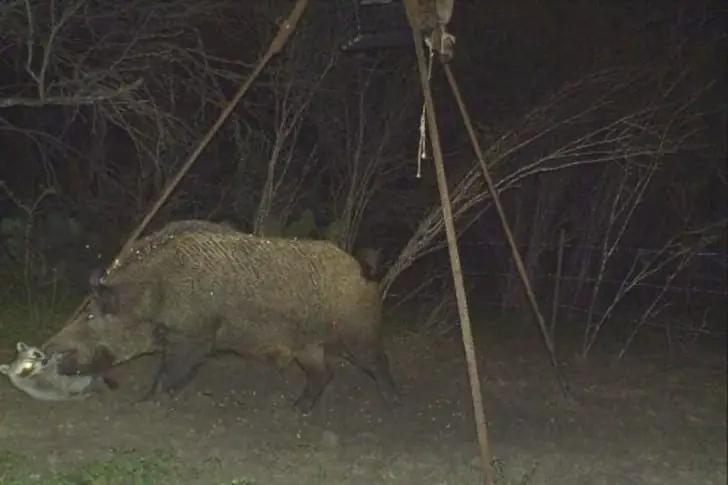
This looks less like a peaceful night in the woods and more like a bar fight that broke out under the feeder. This clash makes you wonder if the competition for spilled corn got too heated. With wild boars tipping the scales at 200 pounds or more, it’s clear which side has the advantage in this brawl.
Boars are omnivores, but they’ve been known to prey on small mammals, reptiles, and even young deer when food is scarce. So while raccoons aren’t usually on the menu, the idea of a boar taking a swipe at one isn’t as far-fetched as it first looks.
Predator Face-Off: Fang vs. Claw
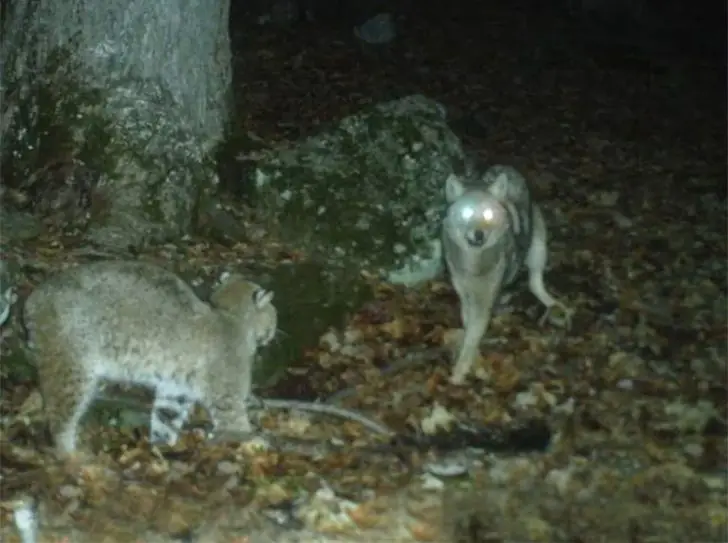
It’s the wilderness version of the age-old rivalry, cat versus dog, but with sharper teeth and higher stakes. Coyotes usually hunt in pairs or packs, giving them strength in numbers, but a lone one like this might think twice about tangling with a bobcat’s ambush skills.
Bobcats are built for stealth, capable of leaping 10 feet in a single bound and delivering a nasty swipe with razor claws. Coyotes, on the other hand, rely on endurance and can run up to 40 miles per hour to wear down their prey. Encounters like this don’t always end in a fight; most often, the smarter move is retreat.
The Sky Turns Into an Ocean
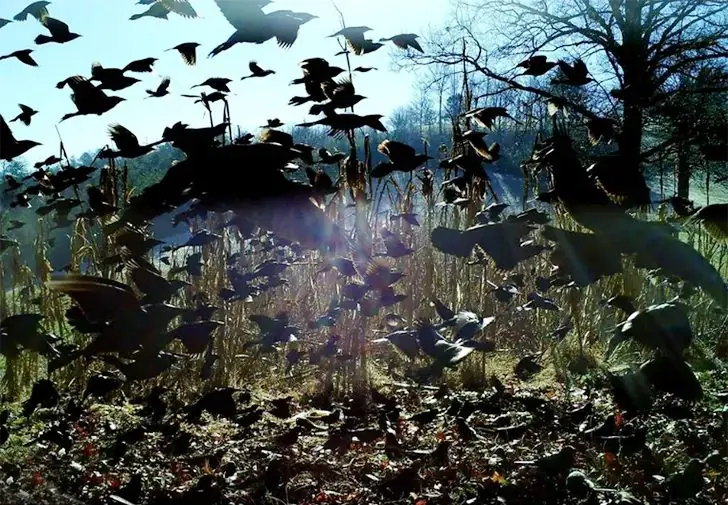
For a split second, this scene looks like a coral reef full of darting fish, until you realize it’s a storm of crows sweeping across the field. The sheer number of them gives the air the density of water, with each bird flapping in sync like part of some grand choreography. Alfred Hitchcock might’ve called it a horror story, but in daylight it feels more like nature’s improv dance routine.
What’s wild is that crows are not just flying in chaos; they’re incredibly social and communicate constantly with calls and body language. Researchers have even found that they can recognize human faces and remember them for years.
The Silent Waiter of the Woods
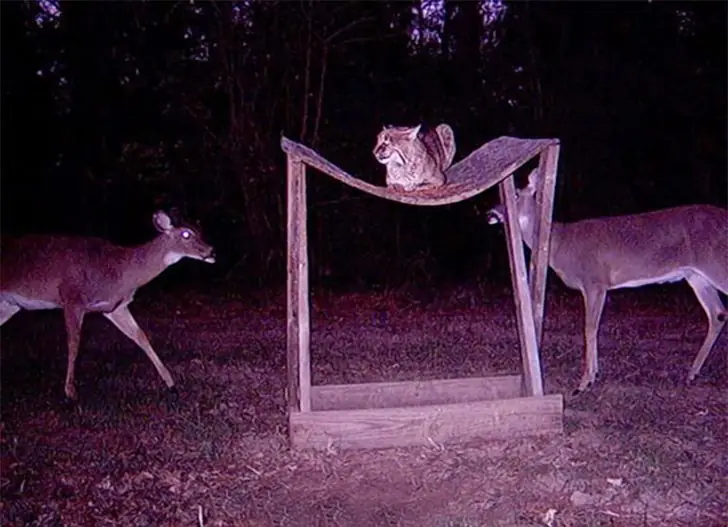
That bobcat couldn’t look more relaxed if it tried, draped across the wooden frame like it’s saving energy for the main event. Below, the deer wander in without a clue, snacking and pacing as though the night belongs to them.
What they don’t realize is that patience is the bobcat’s best weapon: why chase a meal when you can let it walk right into your lap? While rabbits and squirrels are usually its go-to menu items, bobcats won’t pass up a bigger prize if the timing is right. They’re built for ambush, using explosive bursts of speed after sitting motionless for what feels like forever.
When Deer Forget Their Job Description
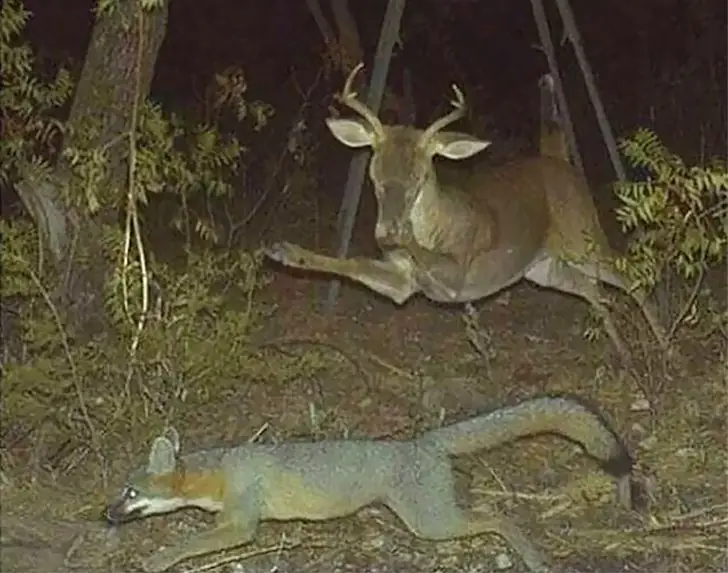
This is a rare moment where the usual prey animal flips the script. The deer’s pose screams pounce, which is not exactly the behavior you’d expect from an animal better known for bolting away than starting fights. For the fox, it’s just another night’s hustle, suddenly interrupted by a very unexpected flying neighbor.
To clear things up: deer don’t eat foxes, ferrets, or any other small mammals. They’re strict herbivores, sticking to leaves, twigs, fruits, and grass. What’s happening here is more likely territorial frustration or a defensive move. After all, deer have been known to lash out with their hooves if startled or if they feel cornered.
Privacy, Please—Fox Edition
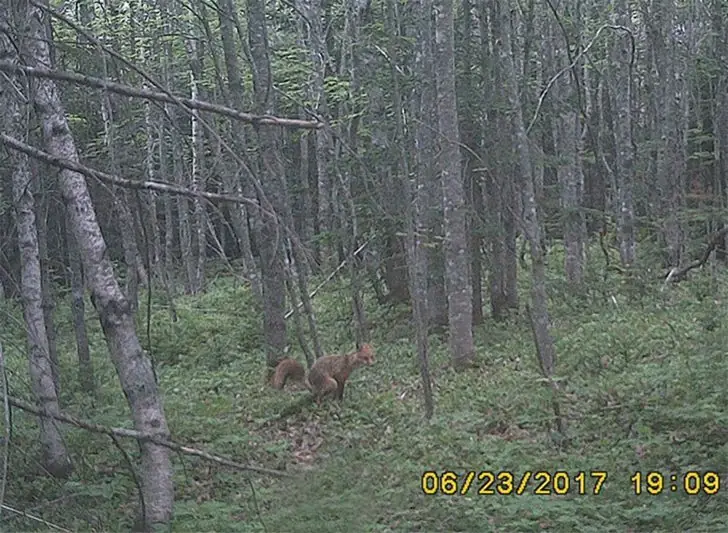
Out in the middle of the woods, this fox clearly thought it had found a quiet spot to handle its business. Instead, a trail camera was there, clicking away, turning a private moment into unexpected internet fame. The animal’s mid-squat stance says it all: caught red-pawed with no chance of playing it cool.
While it feels funny to stumble upon such a snapshot, it’s also a reminder that trail cams record everything, no matter how mundane. Foxes, after all, are shy creatures that usually avoid humans, relying on stealth and silence to go about their nightly routines. Here, though, the technology doesn’t let them hide.
The Deer And The Flying Squirrel Return
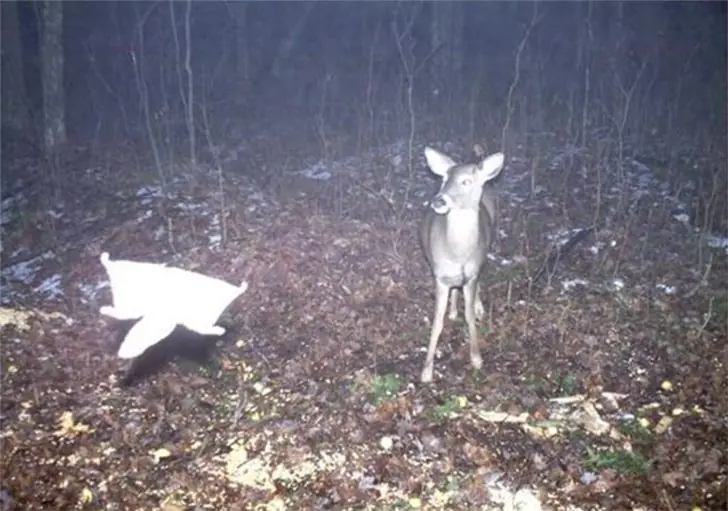
Here we have round two of deer versus flying squirrel, and this time the deer isn’t losing its cool. Instead of leaping back in panic, it stands steady, giving the airborne daredevil a look that says, “Really? That’s your move?” The squirrel, mid-glide, looks far more dramatic than its size warrants, like it’s auditioning for the role of a forest superhero.
Part of the reason the deer looks calmer now may be thanks to its remarkable night vision. Deer have a reflective layer in their eyes called the tapetum lucidum, which bounces light back through the retina and lets them see clearly in low-light conditions.
The Deer That Jump-Scared Itself
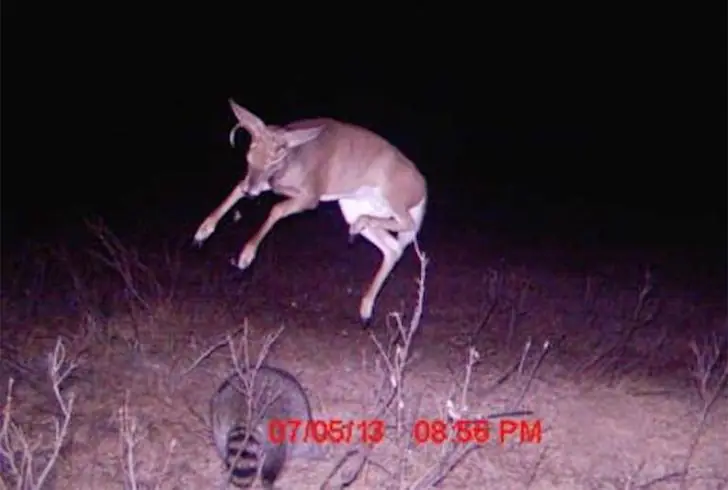
This mid-air freeze frame could easily be mistaken for a cat meme, except it’s a full-grown deer springing straight up like it just saw a ghost. The real culprit is a raccoon minding its own business, probably just shuffling along the trail with no idea it caused an Olympic-level leap.
From the deer’s perspective, though, that striped tail in the dark might have looked suspiciously like a skunk, and that’s definitely a reason to panic. White-tailed deer are notorious for their “stotting” or pogo-like jumps, which they use both to startle predators and to signal danger to their kind nearby.
Forest Gym Session, Bear Style
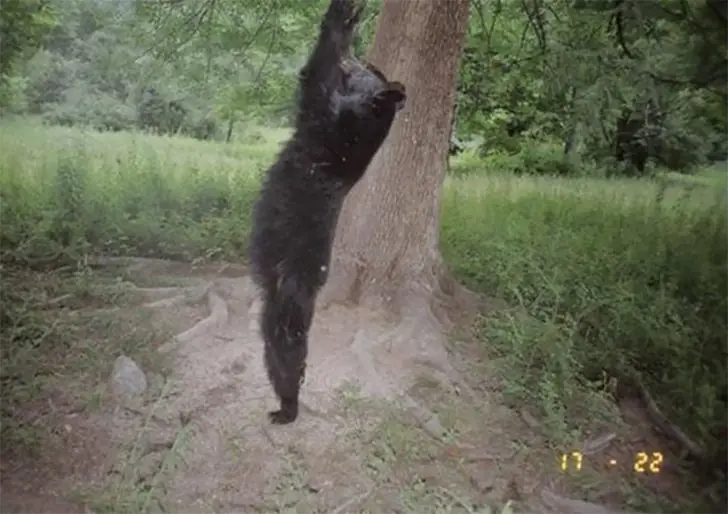
Here’s a snapshot that looks like a black bear signed up for sunrise yoga. Paws out, back arched, and eyes half-focused, it could pass for someone reluctantly following along in a stretching class. Lynn Sheehan, who caught this moment in Pennsylvania, probably never imagined the woods doubling as a woodland gym, but the bear seems committed to the routine.
The truth is a little less Zen and a lot more practical. Bears often stretch after resting, loosening their joints and waking up muscles before moving on to forage. Considering they can sprint faster than most humans and climb trees with ease, keeping flexible is part of their edge.
The Haunting Crew of the Woods
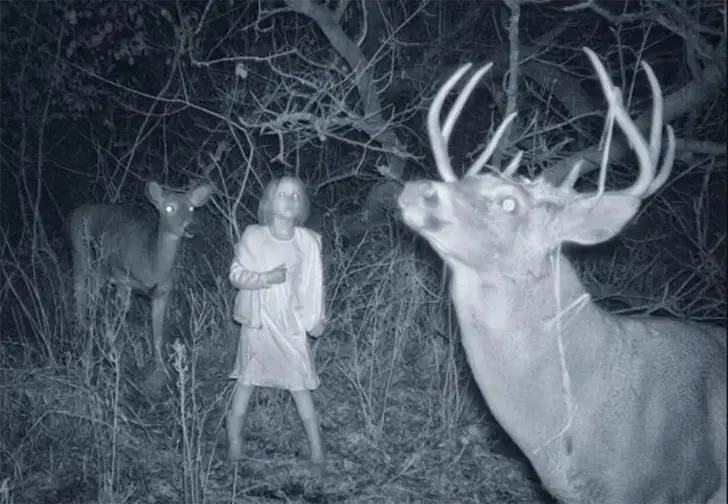
At first glance, this eerie snapshot looks like the opening scene of a ghost story: glowing eyes, a motionless deer, and a little girl in a nightgown appearing out of nowhere. It’s enough to send anyone sprinting back to civilization before daring to take a second look. The unsettling calm on her face, paired with the deer’s frozen stance, makes the forest feel like it belongs to something supernatural.
But there’s no need to panic; this isn’t an accidental capture of the supernatural. Photographer William Harper created this haunting composition as part of his project “Following The Deer,” a collection of images blending real trail cam moments with staged illusions.
When the Woods Turn into a Circus of Nightmares
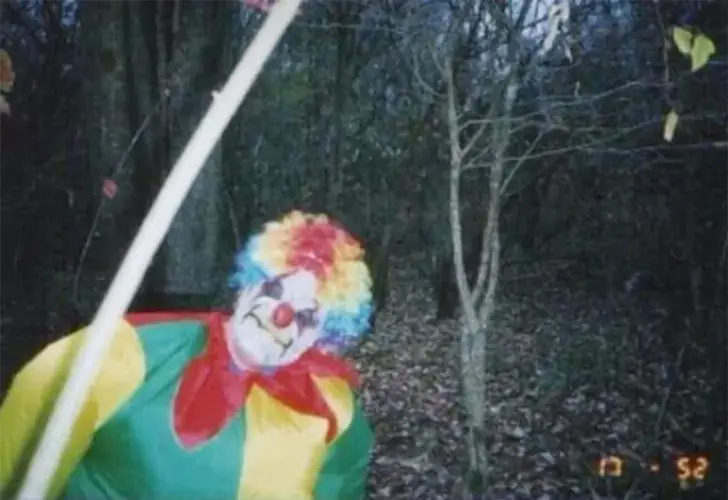
Forget coyotes and bears, this right here might be the most unsettling thing a trail cam has ever picked up. A clown is lurking in the trees like it stepped straight out of a horror movie. Seeing this in the dead of night would send even the bravest hiker bolting, no questions asked.
Back in 2010, someone thought it would be hilarious to wander into the woods dressed as a clown. Snopes later traced this photo back to that year, confirming it was nothing more than a prank. Fast-forward to 2016, and suddenly, clown sightings became a full-blown trend across the United States and even parts of Europe.
A Cryptid Stroll or Just a Bear?
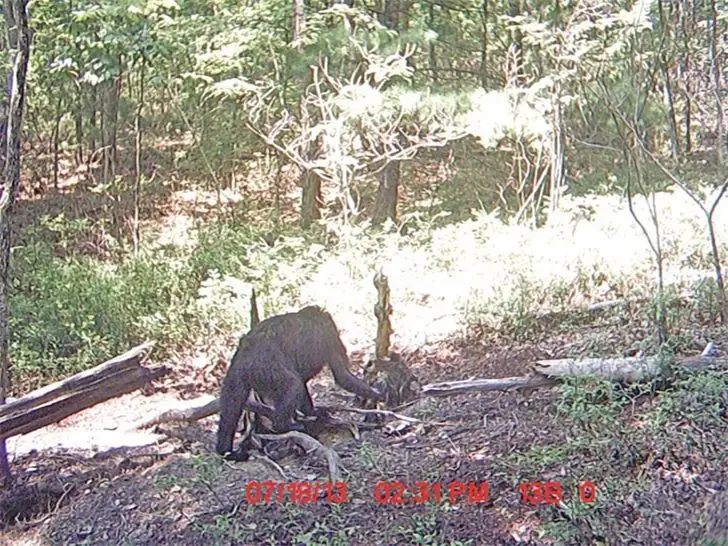
This grainy 2013 trail cam shot has fueled plenty of speculation in the cryptid community. At first glance, it looks like a large dark figure trudging along the forest floor, enough for some to label it the “Virginia Slothfoot,” a supposed relative of the prehistoric ground sloth. Enthusiasts even link it to Megalonyx jeffersonii, a massive species that once roamed North America before going extinct around 10,000 years ago.
The creature’s sheer bulk and slouched shape give plenty of room for wild theories. Of course, the more grounded explanation is far less mystical: most likely a black bear caught at an odd angle.
Predator in the Shadows
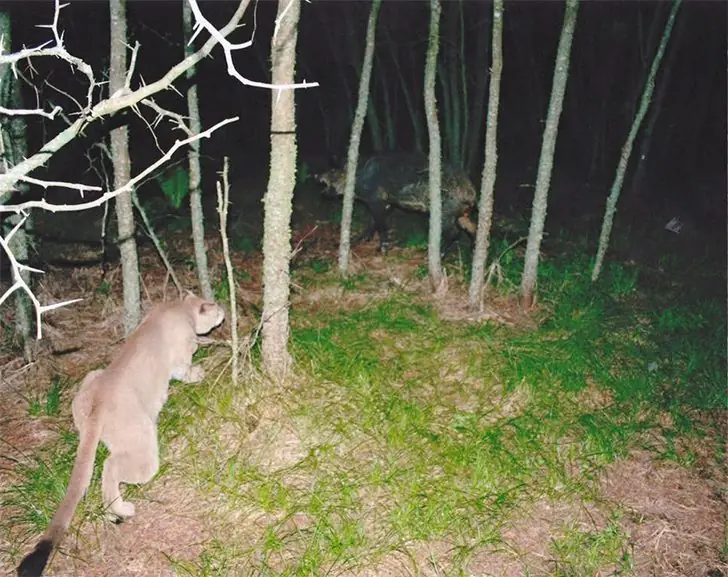
The tension in this frame is thick enough to cut with a knife. A mountain lion creeps low, its eyes locked on the wild boar rustling ahead, utterly unaware of the danger closing in. The stalk is textbook feline, silent, deliberate, and patient, making it feel like something you’d catch in a nature documentary right before the narrator whispers about the “final approach.”
Mountain lions are apex predators, and wild boar make for a worthy challenge. Boars are notoriously tough, with sharp tusks and the ability to fight back fiercely, but cougars rely on stealth and precision to even the odds.
Ballroom Dancing For Porcupines
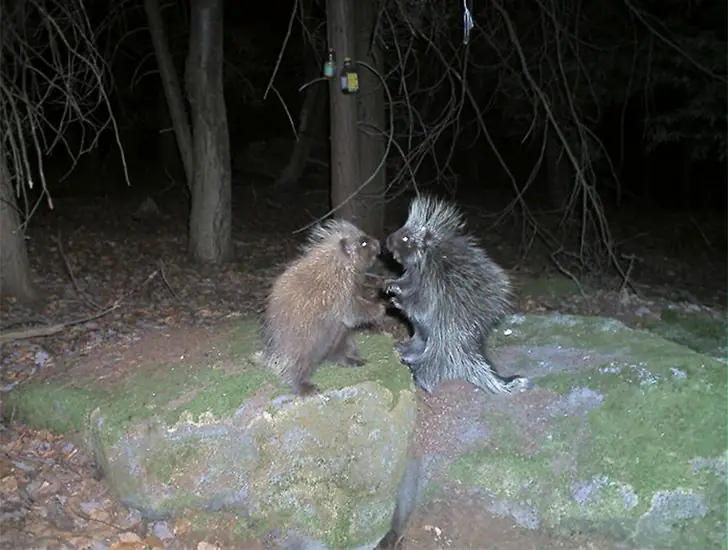
Caught mid-stance, these two porcupines look like they’re either rehearsing for a ballroom competition or settling a serious dispute. With their little paws raised and quills bristling, it’s hard to tell if we’re looking at romance or rivalry.
Porcupines aren’t exactly known for their social grace, which makes us rethink what’s happening here. They’re solitary for most of the year, meeting up mostly for mating or defending territory. Their quills, about 30,000 of them, aren’t shot like arrows as myths suggest, but detach easily when pressed into an opponent. So, whatever this showdown was about, neither wanted to be on the receiving end.
The Rabbit Hole, Upgraded
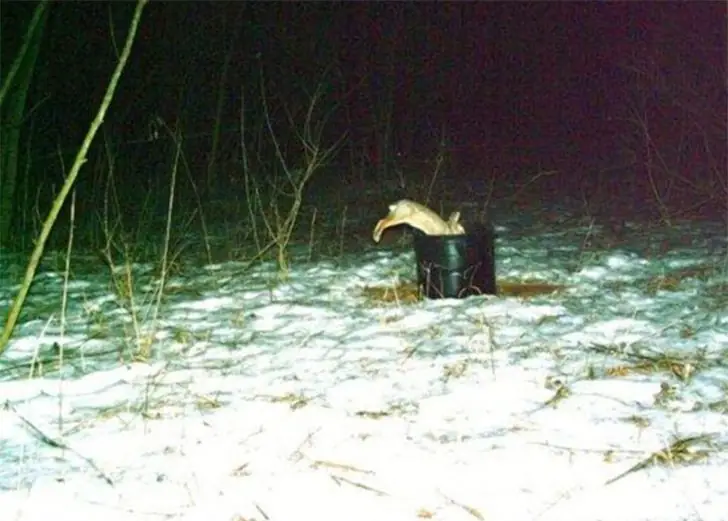
If Lewis Carroll were around today, he might have swapped Alice’s rabbit hole for this metal bin. The trail cam catches a daring bunny mid-dive, headfirst into what looks like its own personal pantry. Forget Wonderland; this one seems convinced that the real magic lies at the bottom of a food bucket.
Hares are notorious opportunists when it comes to snacks, munching on everything from bark and twigs in winter to greens and fruit when they can find them. With a strong sense of smell and sharp curiosity, it’s no surprise this little adventurer went full acrobat for the chance at an easy feast.
The Mid-Air Mule Kick
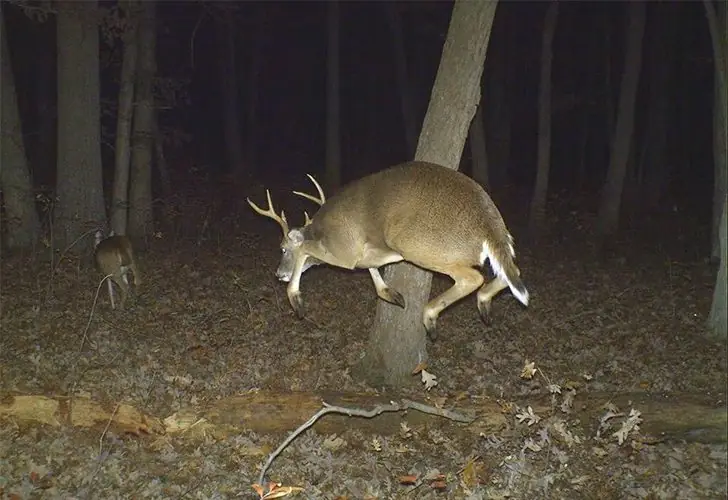
Trail cams usually catch deer quietly grazing, but here’s one frozen mid-jump like it just got cast in an action sequence. With its legs tucked and antlers tilted, this buck looks more like it’s dodging imaginary lasers than just bounding over a log. Its pal in front, meanwhile, wasn’t one to avoid theatrics.
Deer are built for these kinds of explosive moves. Their powerful hind legs allow them to leap as high as 8 feet and cover distances of up to 30 feet in a single bound. That’s Olympic-level stuff, except without the medals, just bragging rights in the woods.
Crowned in Tumbleweed Couture
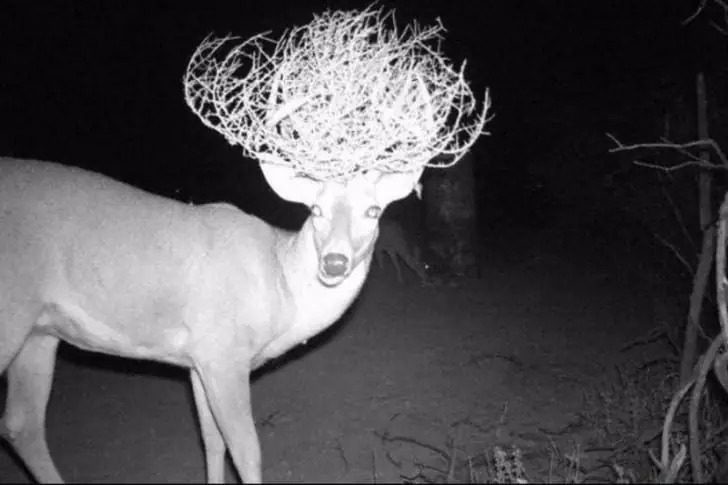
Move over, runway models; this buck just invented woodland haute couture. Instead of antlers, it’s rocking a giant tumbleweed crown like it belongs on the cover of a fashion magazine. The trail cam caught it pausing just long enough to look like it knew exactly how fabulous the headpiece made it.
If there were a forest edition of Vogue, this shot would’ve been the cover story. As funny as it looks, deer often get things tangled in their antlers during the rutting season when they’re thrashing shrubs, branches, or brush to mark territory. Tumbleweeds, being lightweight and prickly, make the perfect accidental accessory.
Owl vs. Deer: The Surprise Midnight Rodeo
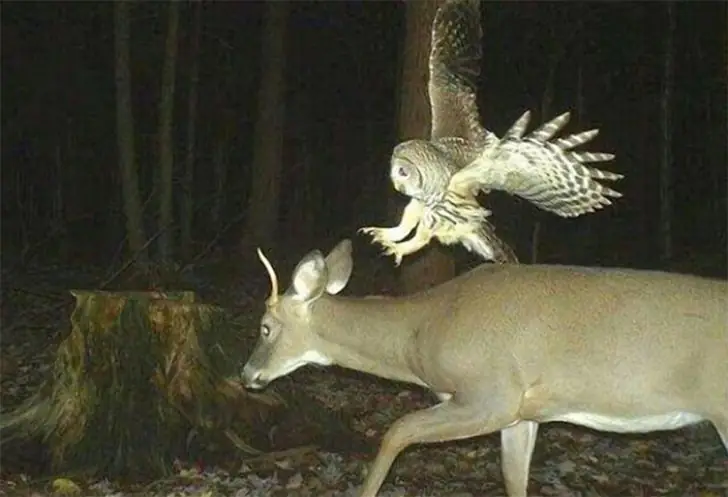
Here’s something you don’t catch on nature documentaries too often: an owl treating a deer like it just signed up for a surprise rodeo. While most people think of owls as those wide-eyed, quiet sages of the forest, this one clearly chose chaos. Silent in flight, owls can swoop down without making a sound thanks to the fringed edges of their feathers.
That means this deer probably had zero clue it was about to become part of a bizarre airborne ambush. And here’s the wild part: Great horned owls, for instance, are known to take on prey nearly as big as themselves, including skunks and even other birds of prey.
The Tired But Proud Fox Mom
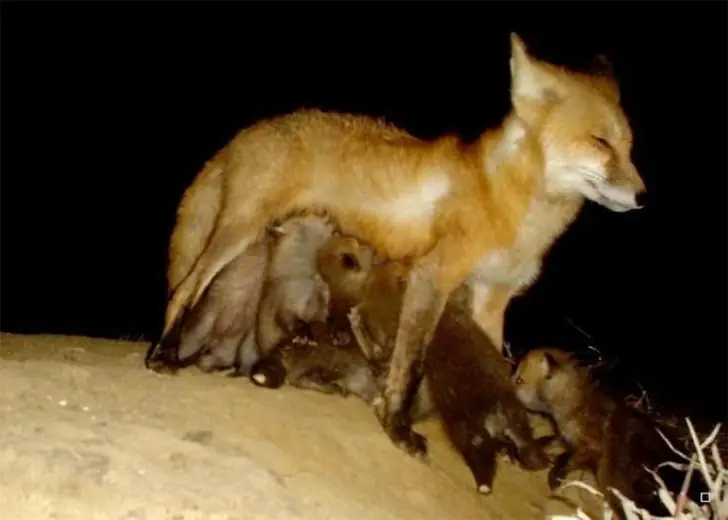
This snapshot shows a vixen in her full-time, unpaid job as mom, surrounded by her hungry kits all clamoring for dinner at the same time. She looks like she’s half-asleep on her paws, which isn’t far from the truth—female foxes can spend weeks caring for their newborns without leaving the den. During that time, the male fox takes on the role of provider, bringing back food for both mom and pups while she handles the late-night feedings and babysitting shifts.
Once the kits are a bit older, the vixen gradually eases them into independence, teaching them how to dig, stalk, and eventually hunt. Fox kits usually start venturing out of the den at around four weeks old, but they stick with mom until autumn, learning all the sly tricks of survival. By then, the vixen’s work is done, though her frazzled face here says it all—raising fox babies is no less chaotic than raising human ones.
Sky Kings with No Table Manners
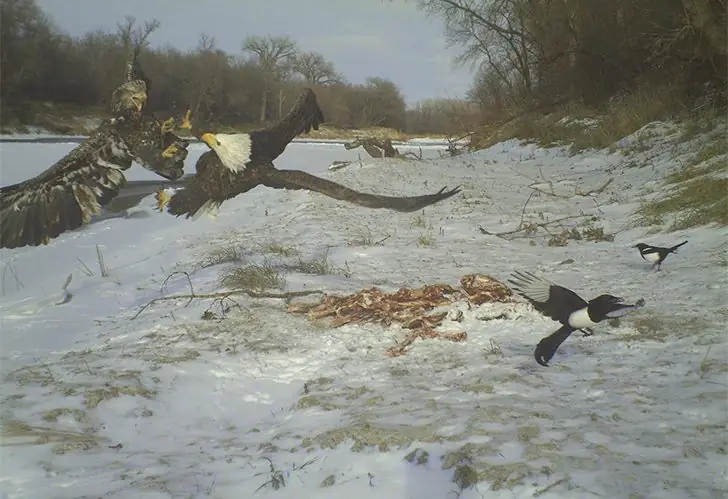
No mediator, no rules, just claws out in midair; these two bald eagles are settling their beef over… well, actual meat. Eagles are notorious for their food fights, and this photo captures exactly why. Despite their reputation as noble symbols, bald eagles are opportunistic feeders who’d rather steal than hunt if the chance arises.
That pile of carcass scraps below is an all-you-can-eat buffet, and neither bird is interested in waiting for a turn. Interestingly, bald eagles can lock talons during these clashes and sometimes spiral dramatically to the ground before breaking apart. They look fierce, and with wingspans reaching up to 7.5 feet, their brawls are anything but subtle.
Battle of the Bucks
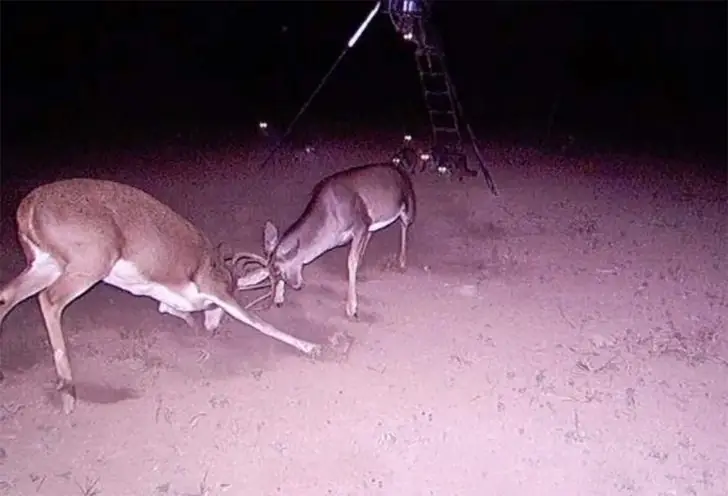
Two deer, one feeder, and zero patience—that’s how this showdown kicked off. Antlers crash together in the moonlit dirt as each buck tries to prove he’s the stronger one. While it looks like they’re about to snap their necks, this is standard deer behavior, especially in the fall rutting season when tempers flare. Food, territory, and bragging rights are all reasons for these late-night headbutts.
The good news? These fights are usually more about intimidation than actual harm. Antlers are designed for this kind of combat, and once the season’s over, they’ll drop off and regrow bigger the following year. Still, there have been unlucky cases where antlers lock tight, leaving both deer in a dangerous bind. Nature may be spectacular, but it sure doesn’t hand out participation trophies.
Raccoon Steals the Spotlight
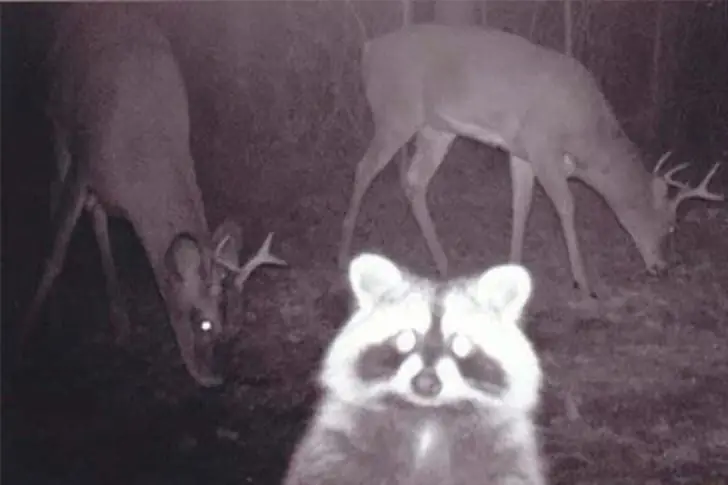
The deer were supposed to be the stars of this trail cam shot, quietly enjoying their late-night snack. But then, bam! A raccoon pops up front and center, turning the whole scene into an accidental wildlife comedy. With its glowing eyes and perfect timing, it looks less like a forager and more like a party crasher demanding attention.
And honestly, it fits. Raccoons are notorious opportunists, famous for scavenging wherever food is to be found. So while the deer grazed in the background, this little troublemaker decided to mug for the camera, proving that even in the animal kingdom, there’s always someone ready to steal the show.
Catching a Ride, Wildlife Style
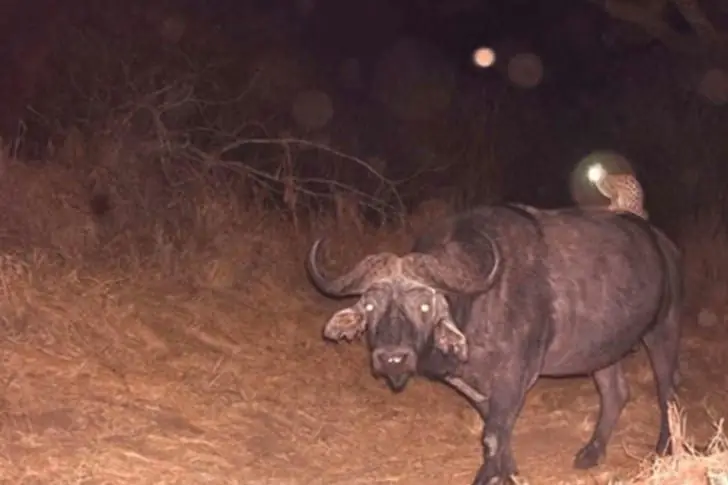
What looks like an owl moonlighting as a chauffeur’s passenger is actually a genet, a small, cat-like carnivore known for its agility and stealth. In this bizarre trail cam moment from South Africa, the genet hopped on a buffalo’s back as if it ordered a late-night taxi through the bush.
While it might look comical, the behavior makes practical sense: genets sometimes ride larger animals to avoid predators on the ground or to scout for prey stirred up by their massive hosts. Genets are nocturnal hunters, feeding on insects, rodents, and birds. By perching on the buffalo, this one gained a safe, elevated view of the surroundings.
The Everglades Night Crawler
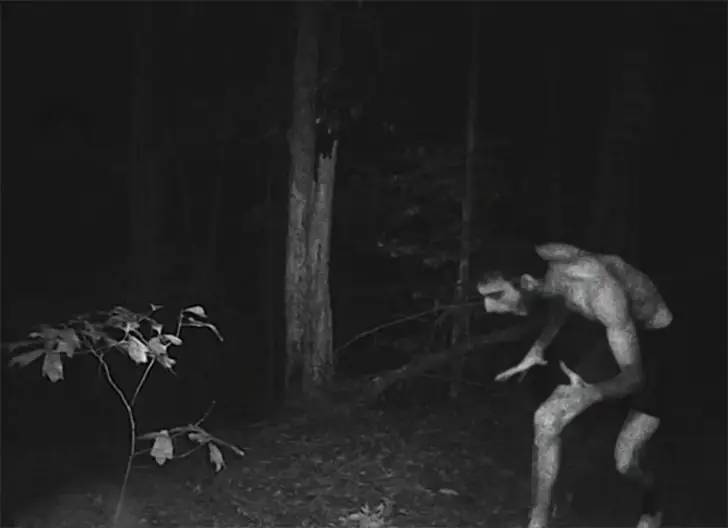
If you thought gators were the scariest thing lurking in Florida’s swamps, think again. This eerie trail cam snap looks straight out of a horror flick: a gaunt, half-bare figure creeping through the Everglades like he’s auditioning for the role of “Swamp Thing’s long-lost cousin.”
Naturally, the internet ran wild: some swore he was a survivalist testing his limits, while others brushed it off as nothing more than a prank gone too far. Either way, if you stumbled on this in the middle of the night, you’d probably never set foot in the woods again. Forget Bigfoot, this guy might just be the true cryptid of the Everglades.
Woodland Odd Squad
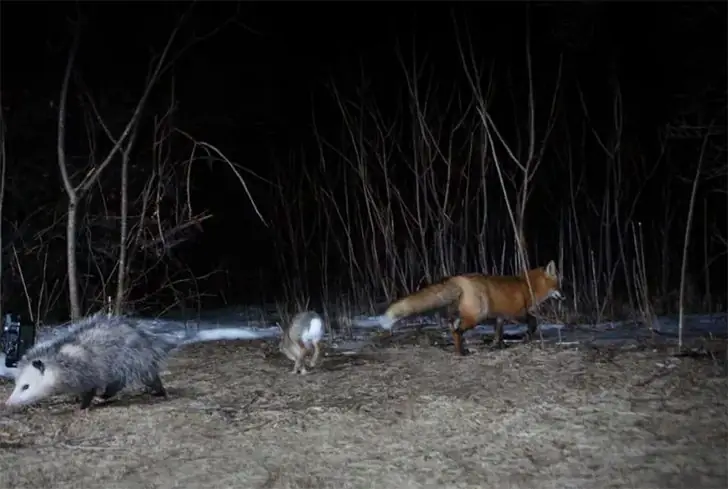
Now here’s a lineup you don’t see every day: a rabbit, a fox, and a possum all caught in the same frame like they’re leaving a very awkward dinner party. The rabbit is bouncing off stage left, the fox is heading right like he’s got better plans. The possum looks like it’s just trying to mind its business and pretend it didn’t see anything.
Of course, behind the comedy is a reminder of how the food chain works. Foxes are opportunistic predators and could easily target rabbits, and while possums don’t usually make the menu, they aren’t exactly above suspicion either. Still, for this one fleeting moment, peace was declared.
Dinner and a Show? Front-Row Tickets, Please!
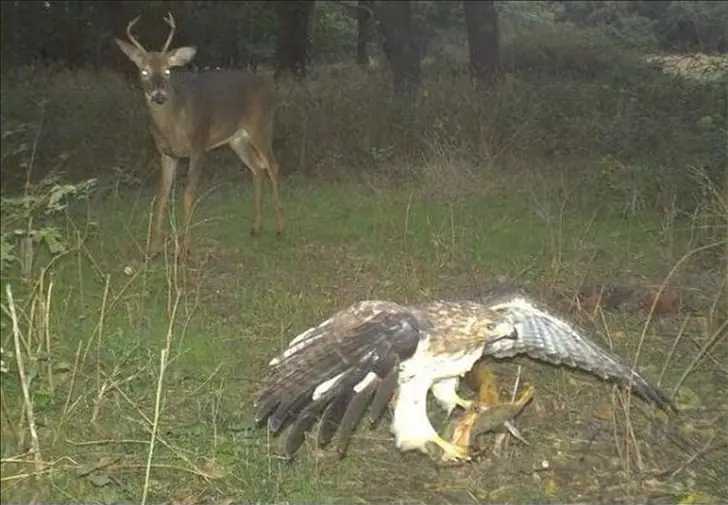
Talk about front-row seats! This deer looks like it stumbled into a live wildlife documentary, staring wide-eyed as a hawk digs into its catch. The hoofed spectator seems clueless, almost like it’s wondering if it just walked into the wrong theater. While deer are strictly plant-eaters, they might as well take notes here because hawks are the ultimate masters of the ambush strike.
So, what do hawks eat? These raptors are versatile hunters, feasting on small mammals like rabbits, squirrels, and rodents, as well as birds, reptiles, and even insects when pickings are slim. Their razor-sharp talons and keen eyesight make them nearly unstoppable once they’ve locked onto prey.
Trophy of the Tundra
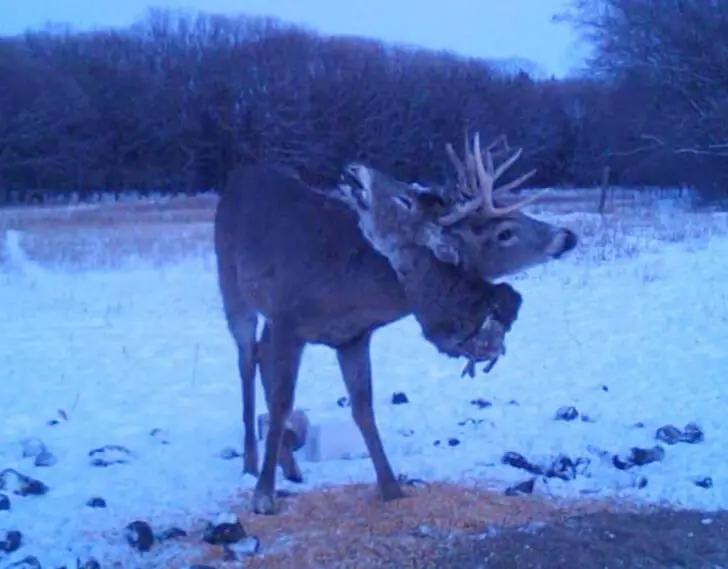
Trail cameras often capture the grace of deer bounding through snowy fields, but this image tells a much harsher story of survival. Two bucks locked antlers in a fight for dominance, a brutal ritual that can end in serious injury or even death. Here, the victor roams on, carrying the gruesome reminder of its battle.
It’s as if the deer itself is wearing a crown of warning to any would-be challengers. Such fights usually erupt during the rutting season, when bucks clash to win the right to mate. Most battles end when one backs down, but occasionally, as seen here, the antlers lock too tightly, and the struggle ends fatally.